Web App Development
  Cloud App Development
  Front-End Development
  Cross Platform Development
  MVP Development
  Application Modernization
  PWA Development
  SaaS Application Development
  Software Development Outsourcing
  Offshore Custom Software Development
  Full Stack Software Development
  Custom Software Development
  Enterprise Software Development
  Cloud Computing Solutions
  Cloud Development
  Managed Cloud Services
  Cloud Native Development
  AI Consulting
  Machine Learning Development
  LLM Development
  AI Chatbot Development
  Data Analytics
  CI CD Development
  Digital Transformation
  Dev Ops
  Content Development
  Blockchain Development
  Web Development
  Web Design



 Generative AI
  Large Language Model
  AI Chatbot
  AngularJs
  ReactJS
  Dotnet Core
  Android
  iPhone
  Swift
Swift  E-Commerce
  NopCommerce
  BigCommerce
  Laravel
  Yii
Yii  AWS
AWS  Google Cloud
  Azure DevOps
  Automation Testing
  Security Testing
  API Testing
  Functional Testing
  MEAN Stack
  MERN Stack
  Full Stack Developers
  biz.encodedots
  biz@encodedots.com
  +91 99747 42737


- Portfolio Owners Need Asset Management Software
- Key Features of Real Estate Asset Management Software
- Benefits of Using Real Estate Asset Management Software
- Reduced Manual Errors
- How It Impacts ROI for Portfolio Owners
- Real-World Use Cases
- Choose the Right Real Estate Asset Management Software
- Common Challenges and How to Overcome Them
- Future Trends in Real Estate Asset Management Technology
- How EncodeDots Can Help You
- Conclusion
- Ready to Take Control of Your Real Estate Portfolio?
- Frequently Asked Questions
Ten years ago, managing a real estate portfolio meant juggling a few properties and a thick folder of paperwork. Today, it looks nothing like that.
If you own or manage a portfolio now, you already know the feeling. One property has a lease renewal coming up. Another has a maintenance issue you keep meaning to address. Your accountant is asking for numbers you haven’t pulled yet. And somewhere in your inbox is a compliance deadline you really don’t want to miss.
This is the reality of modern portfolio management: multiple assets, scattered locations, dozens of tenants with different needs, financials that have to stay accurate, and regulations that seem to change every quarter.
And here’s the hard truth: most people learn the expensive way. When all of this lives in spreadsheets and someone’s memory, things slip. A renewal gets missed, and a unit sits three months at below-market rent. A repair gets delayed, and a good tenant walks. A filing date passes, and now you’re paying a penalty that no one budgeted for.
None of these is a dramatic disaster. That’s exactly why they’re dangerous. They’re quiet, ordinary mistakes that add up to real money over a year.
This is the gap real estate asset management software is built to close. Instead of chasing information across ten different places, you have one source of truth. The routine work that used to eat up your week runs automatically. And instead of reacting to problems after they cost you, you see them coming while you can still do something about them.
The result isn’t just less stress, though you’ll feel that too. It’s better decisions, made faster, with the full picture in front of you.
Explore the Insight: Real Estate Lead Management Software
Why Portfolio Owners Need Asset Management Software
The numbers behind the need are hard to ignore. According to industry research, over 80% of real estate portfolio owners still rely heavily on spreadsheets and manual processes for financial tracking, a method that leads to an estimated 20-30% loss in operational efficiency. Meanwhile, portfolios that adopt dedicated asset management software report an average 25% reduction in administrative time and a significant improvement in on-time lease renewals. As portfolios grow beyond 10 properties, managing data manually becomes exponentially more complex.
Increasing Portfolio Complexity
As portfolios grow, managing multiple assets across spreadsheets and scattered tools becomes unmanageable. Every property brings its own rent schedules, leases, expenses, and compliance requirements. Without a centralized system, critical tasks fall through the cracks, renewals get missed, invoices go unlogged, and you lose visibility over the entire portfolio.
Data-Driven Decision Making
Here’s something most owners get wrong about their own struggle: they think they have a data problem. They don’t. They have a scattered data problem.
The numbers exist. They’re just everywhere. Some in spreadsheets, some buried in email, some in your head, some in an update your team sent last Tuesday. So when you need a straight answer, which property is underperforming, where your cash flow actually stands, you can’t just look. You have to assemble it. And by the time you’ve pieced it together, the moment to act has usually passed.
That’s the shift asset management software makes. Occupancy, rental income, expenses, performance trends, all in one place, all current. You stop reconstructing the picture after the fact and start seeing it as it happens. No guesswork, no delay. Just a clear view when you actually need it.
Risk and Compliance Management
Compliance in real estate is a moving target. Rules change, deadlines shift, and documentation requirements grow. Asset management software tracks all your compliance obligations, stores documents, and sends automated reminders.
Key Features of Real Estate Asset Management Software
Centralized Portfolio Dashboard
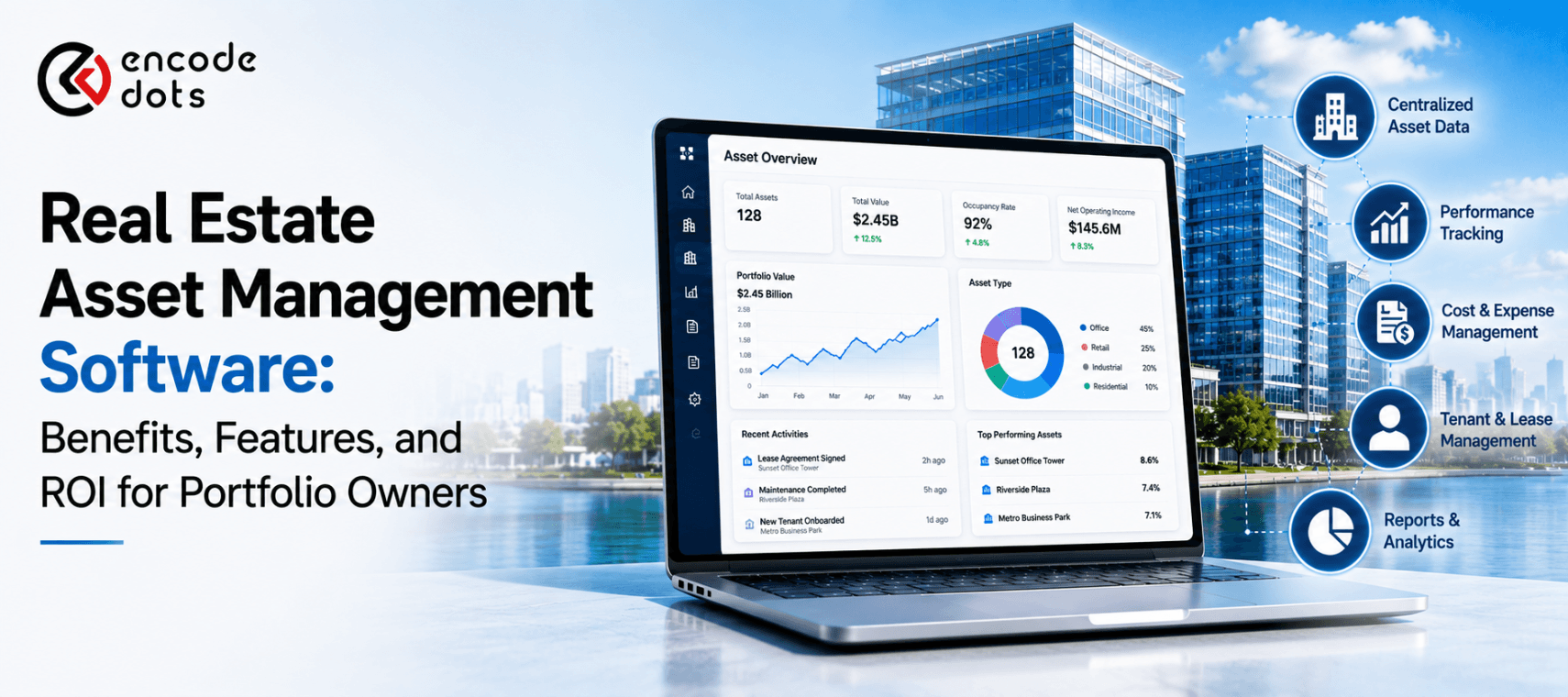
A unified dashboard provides a complete overview of all properties in one place. From occupancy rates to financial summaries, everything is accessible at a glance. This eliminates the need to switch between multiple tools or spreadsheets.
Financial Management & Reporting
One of the most valuable aspects of real estate software is financial visibility. It enables:
- Cash flow tracking
- Budgeting and forecasting
- Expense management
- Automated reporting
With these capabilities, portfolio owners can clearly understand where their money is going and how each asset is performing.
Lease and Tenant Management
Managing leases manually often leads to missed renewals or delays. Software solutions automate lease tracking, send reminders, and store tenant information in an organized manner.
Performance Analytics
Advanced platforms provide real estate asset performance analytics, offering insights into metrics like ROI, net operating income (NOI), and occupancy trends. These insights help identify underperforming assets and optimize strategies.
Document & Data Management
From contracts to legal documents, everything is stored securely in one place. Easy access to documents improves efficiency and ensures compliance.
Automation & Workflow Management
Automation is a major advantage. With property management automation software, repetitive tasks such as rent tracking, reporting, and alerts are handled automatically, saving time and reducing errors.
Integration Capabilities
Modern systems integrate with CRM tools, accounting software, and other business applications. This ensures seamless data flow and eliminates duplication of work.
Looking for a custom real estate asset management solution built for your business?
At EncodeDots, we design tailored platforms that match your workflows, scale with your growth, and deliver measurable ROI. No generic tools—just solutions built for your success.
Talk to Experts!Benefits of Using Real Estate Asset Management Software
Real estate asset management software is designed to simplify complex operations, improve decision-making, and maximize returns. Centralizing data and automating key processes, it enables portfolio owners to manage assets more efficiently and strategically.
Improved Operational Efficiency
One of the biggest advantages of using asset management software is the significant improvement in operational efficiency. Manual tasks such as data entry, report generation, and tracking financials can be time-consuming and prone to delays.
Better Investment Decisions
Making the right investment decisions requires accurate data and timely insights. Real estate asset management software provides advanced analytics tools that help portfolio owners evaluate property performance, market trends, and financial outcomes.
Explore the Insight: Real Estate ERP Software
Enhanced Portfolio Visibility
Managing multiple properties without a centralized system can lead to fragmented data and poor visibility. Asset management software brings all information into a single platform, offering a complete view of your portfolio.
This centralized view lets you monitor key metrics like occupancy rates, rental income, and overall performance, enabling proactive decision-making.
Reduced Manual Errors
Automation minimizes these risks by ensuring accurate calculations, consistent data entry, and reliable reporting. This not only improves data accuracy but also builds trust in the insights generated by the system, leading to more confident decision-making.
Scalability for Growing Portfolios
As your real estate portfolio grows, managing operations manually becomes increasingly difficult. Asset management software is designed to scale with your business.
How It Impacts ROI for Portfolio Owners
Beyond operational improvements, real estate asset management software plays a crucial role in enhancing return on investment (ROI). It provides the tools and insights needed to optimize performance, reduce costs, and uncover new revenue opportunities.
Optimizing Asset Performance
With access to detailed performance data, portfolio owners can identify underperforming properties and take corrective actions. This may include adjusting rental pricing, upgrading amenities, or improving property management practices.
Reducing Operational Costs
Automation reduces the dependency on manual labor and minimizes costly errors. Tasks that previously required multiple resources can now be handled efficiently by the system.
Explore the Insight: AI Chatbots for Real Estate Websites
Increasing Revenue Opportunities
Data-driven insights make it easier to identify new revenue opportunities. For example, analyzing occupancy trends can help optimize rental pricing, while tenant data can reveal opportunities for upselling additional services.
Real-Time ROI Tracking
Modern asset management platforms offer real-time tracking of financial performance and returns. This allows portfolio owners to monitor ROI continuously rather than relying on periodic reports.
Real-World Use Cases
Real estate asset management software is widely used across different segments of the industry. Its flexibility makes it suitable for various business models and portfolio sizes.
Commercial Real Estate Firms
Large commercial real estate firms managing office buildings, retail spaces, and industrial properties rely on asset management software to track performance across multiple locations.
Residential Portfolio Owners
Owners managing multiple residential properties benefit from centralized management and automation. Features like rent tracking, lease management, and tenant insights simplify daily operations.
Real Estate Investment Firms
Investment firms depend heavily on analytics and forecasting tools to maximize returns and manage investor expectations.
Asset management software enables them to analyze market trends, evaluate investment opportunities, and provide transparent reporting to stakeholders. This improves both performance and investor confidence.
Asset management software gives investment teams consolidated portfolio visibility from cap rates and NOI tracking to investor reporting, waterfall distribution modeling, and risk dashboards, all in one platform.
Explore the Insight: Real Estate CRM Automation
How to Choose the Right Real Estate Asset Management Software
Choosing the right real estate asset management software is essential for improving efficiency, maximizing returns, and managing your portfolio effectively. The right solution should align with your business needs, support your growth, and simplify complex operations.
Identify Business Needs
Before selecting any software, it’s important to clearly understand your business requirements. Every real estate portfolio is different, and your needs will depend on factors such as property type, portfolio size, and operational challenges.
Must-Have Features Checklist
A reliable real estate asset management solution should include essential features that support daily operations and long-term decision-making.
Financial reporting is crucial for tracking income, expenses, and overall profitability. An analytics dashboard helps you visualize key metrics like occupancy rates and ROI in real time. Lease management simplifies tracking agreements, renewals, and payment schedules.
Additionally, integration capabilities allow the software to connect with other tools such as CRM and accounting systems, ensuring smooth workflows. Having all these features in one platform reduces manual work and increases operational efficiency.
Here is a quick checklist of must-have features to look for when evaluating any real estate asset management platform:
- Centralized portfolio dashboard with real-time data across all properties
- Automated financial reporting (income, expenses, NOI, cash flow)
- Lease and tenant management with renewal alerts and payment tracking
- Maintenance and work order management system
- Document storage and management (leases, contracts, compliance records)
- Performance analytics and ROI tracking per asset
- Integration with accounting tools (QuickBooks, Xero, etc.)
- Compliance and deadline tracking with automated reminders
- Role-based access control for team members
- Mobile-friendly or cloud-based access from anywhere
- Scalable architecture to support portfolio growth
- Strong data security, encryption, and regular backup
Budget and ROI Considerations
While cost plays an important role, it’s more important to focus on the return on investment that the software can deliver. A lower-cost solution may lack important features, leading to inefficiencies and missed opportunities.
Instead, consider how the software can help you save time, reduce errors, and improve financial performance. Investing in a robust platform may require a higher upfront cost, but it often leads to better long-term returns through improved productivity and smarter decision-making.
Scalability and Customization
As your business grows, your software should be able to grow with it. Scalability ensures that the system can handle an increasing number of properties, users, and data without compromising performance.
Customization is equally important, as it allows you to tailor the platform according to your specific workflows and business model. Features like customizable dashboards, flexible reporting, and role-based access can significantly enhance usability and efficiency.
Choosing a scalable and adaptable solution ensures long-term value and avoids the need for frequent system changes.
Vendor Support and Security
Reliable customer support is essential when implementing and using asset management software. A responsive support team can help resolve issues quickly and ensure smooth operations.
Security is another critical factor, as the software will handle sensitive financial and tenant data. Look for platforms that offer strong data protection measures such as encryption, secure cloud storage, and compliance with industry standards.
A combination of strong support and robust security ensures that your business operations remain uninterrupted and your data stays protected.
Common Challenges and How to Overcome Them
Managing real estate assets through software brings significant advantages, but it also comes with its own set of challenges. Understanding these obstacles in advance and knowing how to address them can ensure a smoother transition and better long-term results.
Implementation Issues
One of the most common challenges businesses face is during the initial implementation phase. Transitioning from manual processes or outdated systems to a modern asset management platform can feel overwhelming.
Data Migration Challenges
Migrating existing data into a new system is another critical hurdle. Real estate businesses often deal with large volumes of financial records, tenant details, lease agreements, and historical data.
Work with your vendor to clean and organize data before migration, validate accuracy during transfer, and use automated tools to ensure nothing is lost. A phased migration approach reduces risk significantly.
User Adoption
Even the best software will fail if teams don’t use it. Combat resistance by involving employees early, providing hands-on training, and clearly communicating how the software makes their work easier.
Explore the Insight: Real Estate Software Development Company
Future Trends in Real Estate Asset Management Technology
As technology continues to evolve, real estate asset management software is becoming more advanced, intelligent, and data-driven. Staying updated with these trends can help businesses remain competitive and future-ready.
AI and Predictive Analytics
Artificial intelligence is playing a transformative role in real estate asset management. Modern systems are no longer limited to tracking data; they are now capable of analyzing patterns and predicting future outcomes.
Predictive analytics can help investors forecast market trends, identify high-performing assets, and anticipate risks before they occur. This allows for more proactive decision-making and better portfolio optimization.
Cloud-Based Solutions
Cloud technology has become a standard in modern software solutions, and real estate asset management is no exception.
Cloud-based platforms allow users to access data anytime, from anywhere, using any device
In addition to accessibility, cloud solutions offer:
- Real-time data updates
- Improved collaboration among teams
- Reduced infrastructure costs
- Automatic backups and security updates
As remote work and digital transformation continue to grow, cloud-based systems will become even more essential.
Smart Automation and Integrations
Automation is rapidly transforming how real estate operations are managed. Tasks that once required manual efforts, such as rent collection, reporting, and maintenance tracking, can now be automated.
Future systems will go even further by integrating with IoT (Internet of Things) devices and smart building technologies. This means asset managers can monitor energy usage, equipment performance, and building conditions in real time.
How EncodeDots Can Help You
Managing a real estate portfolio is no longer just about tracking properties; it’s about making faster, smarter, and more profitable decisions. That’s where the right technology partner makes all the difference.
At EncodeDots, we don’t offer generic software. We build custom real estate asset management solutions tailored to your portfolio, your workflows, and your growth goals.
Here’s how we help you move from chaos to clarity:
Centralized Portfolio Visibility:- We design intuitive dashboards that give you a real-time view of your entire portfolio financials, occupancy, performance, and risks all in one place.
Smart Automation That Saves Time:- From lease tracking and reporting to alerts and workflows, we automate repetitive tasks, so your team can focus on high-value decisions instead of manual work.
Advanced Analytics & ROI Tracking:- Our solutions help you track key metrics like NOI, cash flow, and ROI in real time so you can identify underperforming assets and optimize returns faster.
Seamless Integrations:- We connect your asset management system with CRMs, accounting tools, and third-party platforms to create a unified ecosystem with zero data silos.
Scalable & Secure Architecture:- Whether you manage 10 properties or 1,000, our systems are built to scale with your business while ensuring enterprise-grade security and compliance.
Custom-Built for Your Business:- No two portfolios are the same, so why use one-size-fits-all software? We build solutions aligned with your exact business model and operational needs.
Conclusion
Real estate is no longer just about owning properties; it’s about managing them strategically to maximize value. As portfolios grow and markets become more competitive, relying on outdated systems is no longer sustainable.
Real estate asset management software provides the tools needed to streamline operations, gain deeper insights, and improve decision-making. From enhanced efficiency to better ROI tracking, the benefits are clear.
For portfolio owners looking to scale and succeed in today’s market, adopting modern real estate portfolio management software is not just an option; it’s a necessity.
The sooner you embrace digital transformation, the better positioned you’ll be to unlock the full potential of your real estate investments.
Throughout this guide, we have explored how real estate asset management software transforms the way portfolio owners operate. From centralized dashboards and automated financial reporting to lease management, compliance tracking, and real-time ROI measurement, every feature is designed to give you more clarity and control.
The bottom line is simple: the real estate professionals who win in today’s market are not the ones with the most properties. They are the ones who make the best decisions, the fastest. And that requires the right tools, the right data, and the right technology partner.
Ready to Take Control of Your Real Estate Portfolio?
If you’re still relying on spreadsheets, disconnected tools, or manual processes, you’re not just losing time; you’re losing money.
The right asset management system doesn’t just organize your data; it transforms how you operate, decide, and grow.
Partner with EncodeDots to build a smarter, more efficient, and future-ready real estate portfolio.
Let’s turn your data into decisions and your properties into high-performing assets.