Web App Development
  Cloud App Development
  Front-End Development
  Cross Platform Development
  MVP Development
  Application Modernization
  PWA Development
  SaaS Application Development
  Software Development Outsourcing
  Offshore Custom Software Development
  Full Stack Software Development
  Custom Software Development
  Enterprise Software Development
  Cloud Computing Solutions
  Cloud Development
  Managed Cloud Services
  Cloud Native Development
  AI Consulting
  Machine Learning Development
  LLM Development
  AI Chatbot Development
  Data Analytics
  CI CD Development
  Digital Transformation
  Dev Ops
  Content Development
  Blockchain Development
  Web Development
  Web Design



 Generative AI
  Large Language Model
  AI Chatbot
  AngularJs
  ReactJS
  Dotnet Core
  Android
  iPhone
  Swift
Swift  E-Commerce
  NopCommerce
  BigCommerce
  Laravel
  Yii
Yii  AWS
AWS  Google Cloud
  Azure DevOps
  Automation Testing
  Security Testing
  API Testing
  Functional Testing
  MEAN Stack
  MERN Stack
  Full Stack Developers
  biz.encodedots
  biz@encodedots.com
  +91 99747 42737


- Top Hybrid App Development Companies in the USA
- Hybrid vs. Native vs. Cross-Platform Apps
- Detailed Comparison
- Why Choose Hybrid App Development
- Conclusion
For Startups, choosing the wrong app Development partner can cost more than money; it can cost a market opportunity. That’s why many early-stage and scaling Startups in the USA actively seek experienced hybrid app Development companies that can deliver faster MVPs, control Development costs, and support long-term growth.
Leading hybrid app Development companies in the USA work closely with Startups to build cross-platform mobile applications using a single, scalable codebase. This approach allows founders to validate ideas quickly, launch on both iOS and Android simultaneously, and adapt to user feedback without rebuilding the product from scratch.
Unlike generic Development vendors, Startup-focused hybrid app Development firms bring product strategy, UI/UX thinking, and agile execution into the process. Their experience with funding cycles, rapid pivots, and post-MVP scaling helps Startups move from concept to investor-ready product with confidence.
In this guide, we’ve curated hybrid app Development companies in the USA that consistently support Startup innovation, focusing on speed, technical reliability, and long-term scalability.
Top 18+ Hybrid App Development Companies in the USA
Choosing the right hybrid app Development company can make or break a Startup. To help founders cut through the noise, we’ve curated a list of 17 top US-based hybrid app Development firms known for building fast, scalable, and investor-ready mobile applications.
Each company on this list has been selected based on its Startup experience, cross-platform expertise (including Flutter, React Native, and Ionic), agile development workflows, and proven post-launch support. These firms don’t just code apps; they help Startups launch MVPs quickly, iterate based on real user feedback, and scale products for long-term growth.
Whether you’re just validating your idea or expanding an existing product, this guide highlights hybrid app Development companies in the USA that consistently deliver performance, reliability, and measurable Startup success.
1. EncodeDots
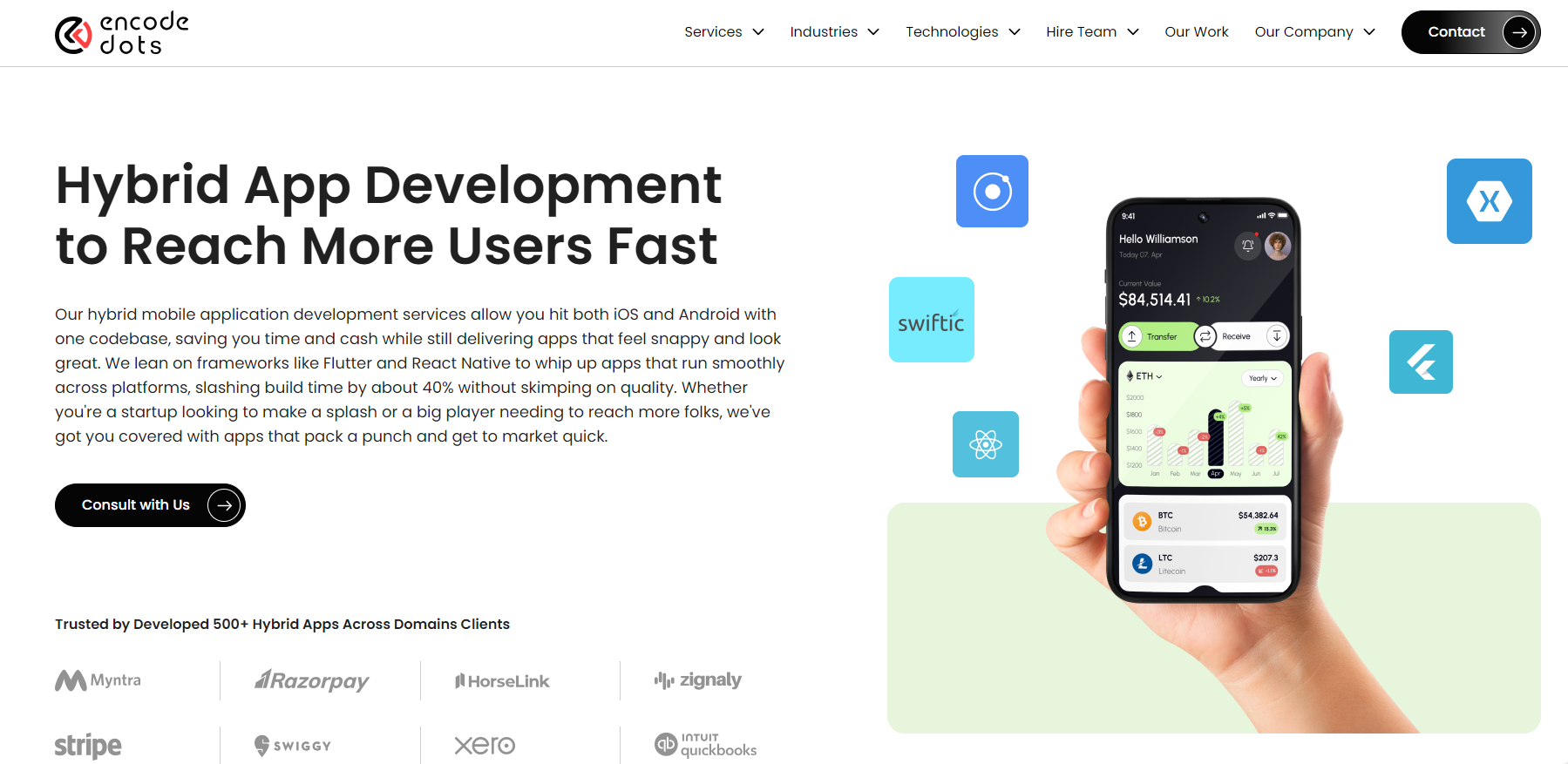
For Startups, building a mobile app that works seamlessly across both iOS and Android is not just a technical challenge; it’s a critical business decision. That’s where EncodeDots comes in. Recognized as one of the leading hybrid app Development companies in the USA, EncodeDots combines technical expertise, innovative solutions, and a Startup-focused mindset to help early-stage businesses turn their ideas into powerful, scalable, and user-friendly mobile applications.
With a deep understanding of Startup needs, EncodeDots ensures that every app is Designed not only to perform flawlessly but also to deliver measurable business results. From MVP launches to full-scale product development, the team at EncodeDots supports Startups throughout the entire app lifecycle.
Why Startups Prefer EncodeDots for Hybrid App Development
1. Startup-Centric Approach
Startups operate under tight budgets, strict timelines, and evolving product ideas. EncodeDots tailors its development approach to meet these constraints, focusing on rapid MVP launches, iterative Development, and cost-effective solutions. By understanding the pressures founders face, EncodeDots ensures Startups can validate ideas quickly, attract early users, and impress investors without unnecessary delays.
2. Expertise in Cross-Platform Technologies
EncodeDots excels in hybrid app Development using advanced frameworks like Flutter, React Native, and Ionic. This expertise allows Startups to build apps that deliver a native-like user experience across multiple platforms while significantly reducing Development time and cost. Whether it’s a feature-rich enterprise app or a lightweight MVP, EncodeDots has the technical capability to handle projects of all scales.
3. Strategic UI/UX Design & Product Thinking
Building a functional app is important, but building an app that users love and investors believe in requires more than code. EncodeDots integrates UI/UX Design and product strategy from the very beginning, ensuring every app is intuitive, visually appealing, and optimized for engagement. This combination of design thinking and technical proficiency helps Startups create apps that stand out in crowded marketplaces.
4. Scalable, Secure, and Future-Ready Solutions
As Startups grow, their apps must grow with them. EncodeDots Designs hybrid apps that are highly scalable, secure, and adaptable to changing business requirements. From handling growing user bases to integrating new features, their development framework ensures that apps remain robust and performant long after launch.
5. End-to-End Support & Post-Launch Services
The relationship doesn’t end at launch. EncodeDots offers continuous support and maintenance, providing updates, feature enhancements, and performance optimizations as Startups expand. This end-to-end partnership allows founders to focus on business growth while the technical team ensures the app remains reliable and competitive.
Why EncodeDots Helps Startups Succeed
- Fast Time-to-Market: Rapid Development processes help Startups launch MVPs faster, allowing early feedback and iterations.
- Cost Efficiency: One codebase for iOS and Android reduces Development costs without compromising quality.
- Investor Confidence: Well-Designed, scalable, and polished apps give Startups credibility when pitching to investors.
- Growth-Oriented: Apps are built with future expansion in mind, supporting scaling and new feature integration.
Our Hybrid App Development Tech Stack
We leverage a modern, versatile tech stack to meet diverse project requirements:
- Frontend & Web Technologies: HTML5, CSS, JavaScript
- Hybrid Frameworks: Flutter, Ionic, React Native, Xamarin
- Backend & APIs: Node.js, Laravel, PHP, MySQL
- Mobile & Cross-Platform Tools: PhoneGap, Ember.js, NativeScript, Apache Cordova
- Frontend Frameworks: Angular
With years of experience delivering innovative hybrid solutions, EncodeDots has become a trusted partner for Startups across industries. Their expertise, combined with a deep understanding of the Startup ecosystem, makes them one of the top hybrid app Development companies in the USA, a company that doesn’t just build apps but helps Startups transform ideas into market-ready, high-performing products.
Best for: Startups and businesses seeking end-to-end hybrid app Development from ideation to deployment.
Services: Hybrid mobile app Development (Flutter, React Native, Ionic), cross-platform MVPs, UI/UX Design, API integration, and post-launch support.
Average review rating: 4.9 (based on client feedback and case studies)
Most common project size: $100,000 – $150,000
2. WiserBrand
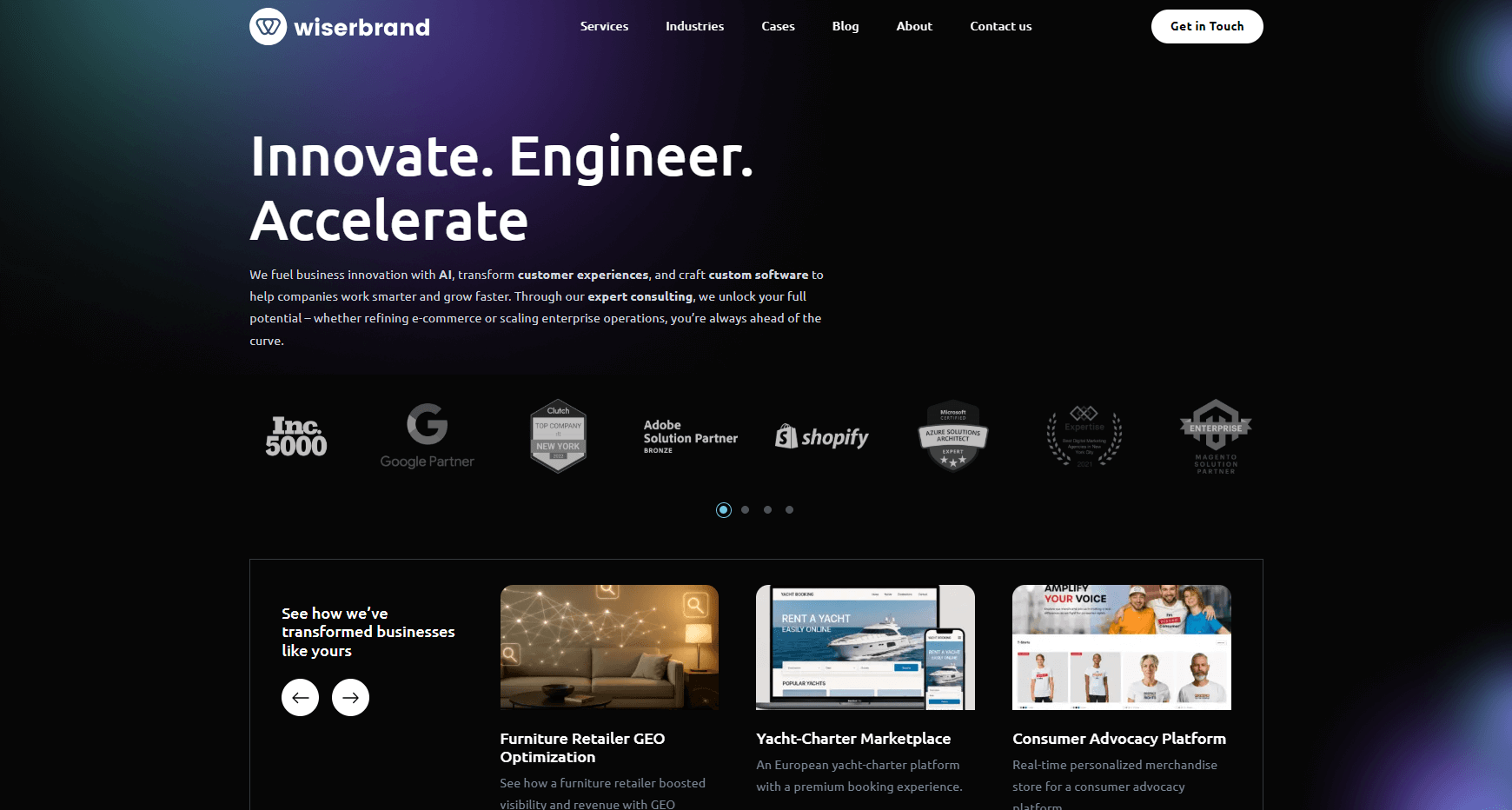
WiserBrand is a US-based Digital solutions company that helps Startups and businesses turn ideas into scalable, high-performance applications. With a focus on hybrid mobile app Development, cross-platform solutions, and product strategy, WiserBrand combines technical expertise with a Startup-friendly approach to deliver apps that are cost-efficient, secure, and market-ready. Their team supports clients from concept and design through development and post-launch growth, ensuring apps evolve with business needs.
Best for: Startups and businesses seeking end-to-end hybrid app Development and digital solutions.
Services: Hybrid mobile app Development, custom software, UI/UX Design, API integration, and post-launch support.
Average review rating: 4.8+ (based on client feedback)
Most common project size: $25,000 – $200,000
3. Octal IT Solution
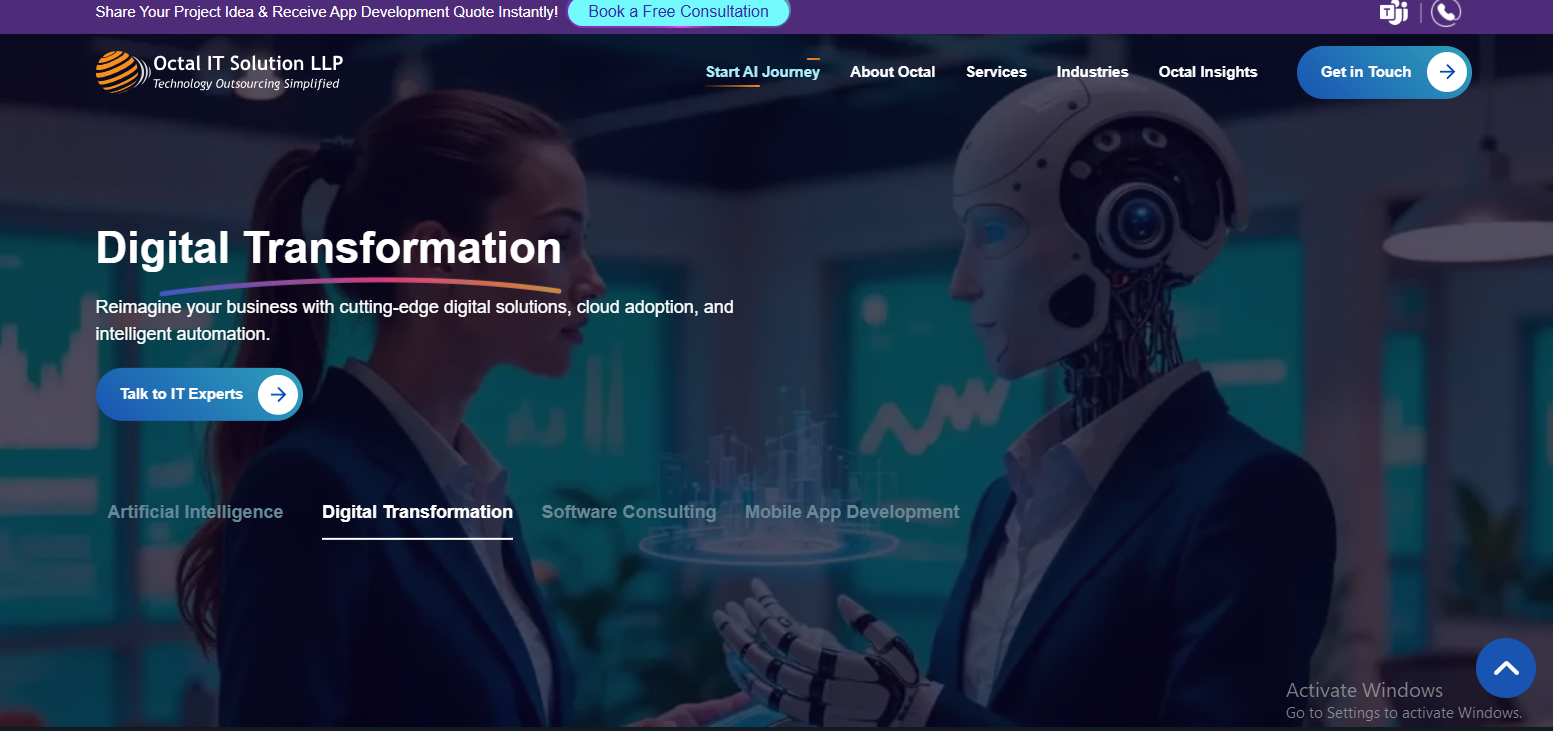
Octal IT Solution is a global Digital solutions company specializing in Hybrid mobile app Development for Startups and enterprises looking to build scalable, secure, and high-performance applications. With expertise in cross-platform development, AI-powered Software, blockchain, and cloud technologies, Octal IT Solution delivers innovative digital products tailored to evolving business needs. Their experienced team supports clients from strategy and UI/UX Design to development and post-launch growth, ensuring applications remain future-ready and market competitive.
Best for: Startups and enterprises seeking end-to-end hybrid app Development and digital transformation solutions.
Services: Hybrid mobile app Development, cross-platform app solutions, AI & ML integration, blockchain Development, UI/UX Design, cloud solutions, API integration, and post-launch support.
Average review rating: 4.8+ (based on client feedback)
Most common project size: $25,000 – $200,000
4. AllianceTek
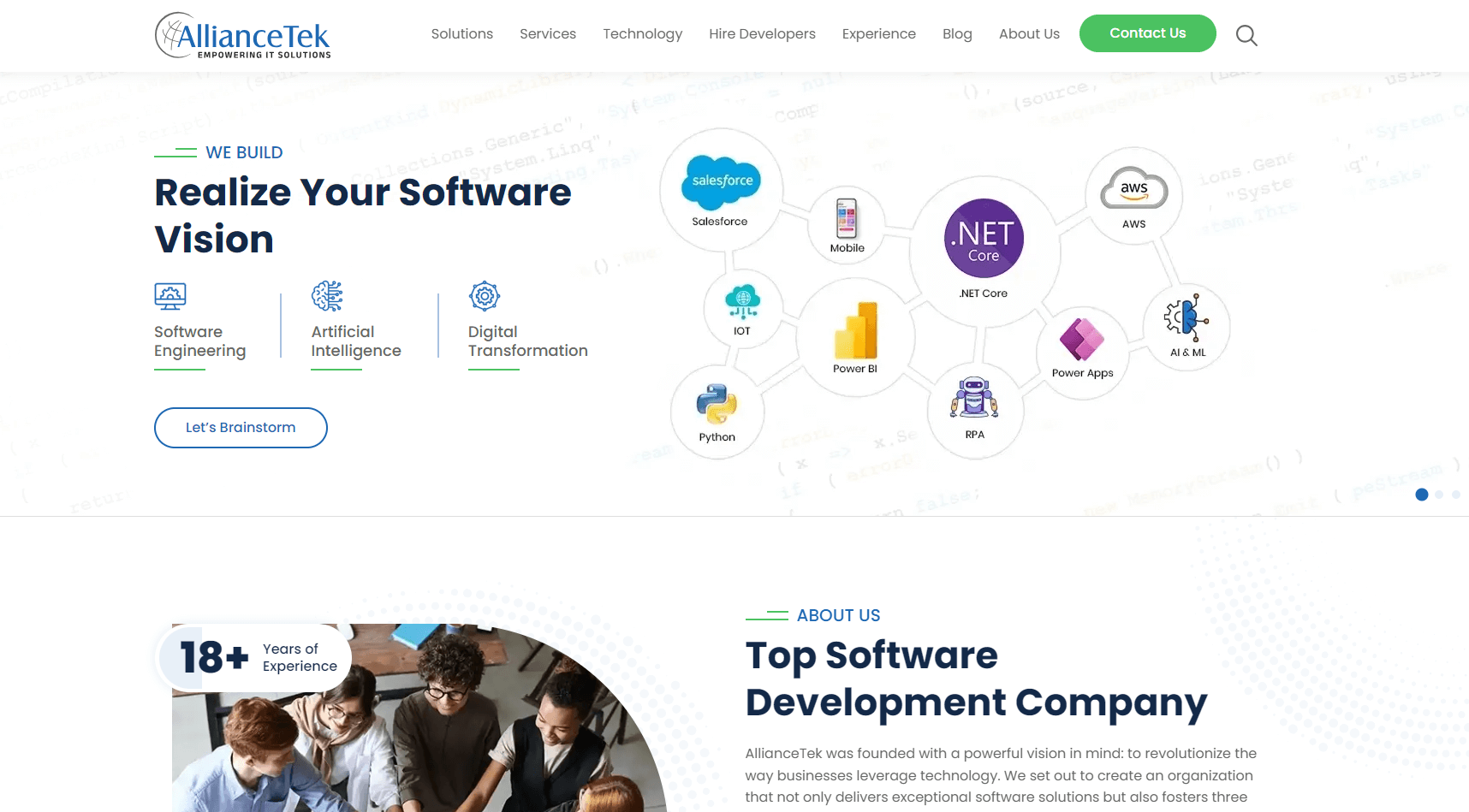
AllianceTek is a US-based technology company that helps Startups and businesses build scalable, high-performance hybrid apps. Their team specializes in cross-platform mobile development, custom software, UI/UX Design, and post-launch support, guiding projects from concept to deployment while keeping apps secure and market-ready.
Best for: Startups and businesses seeking end-to-end hybrid app Development and IT solutions.
Services: Hybrid mobile apps, custom software, UI/UX Design, API integration, and post-launch support.
Average review rating: 4.8+
Most common project size: $25,000 – $200,000
5. Gun
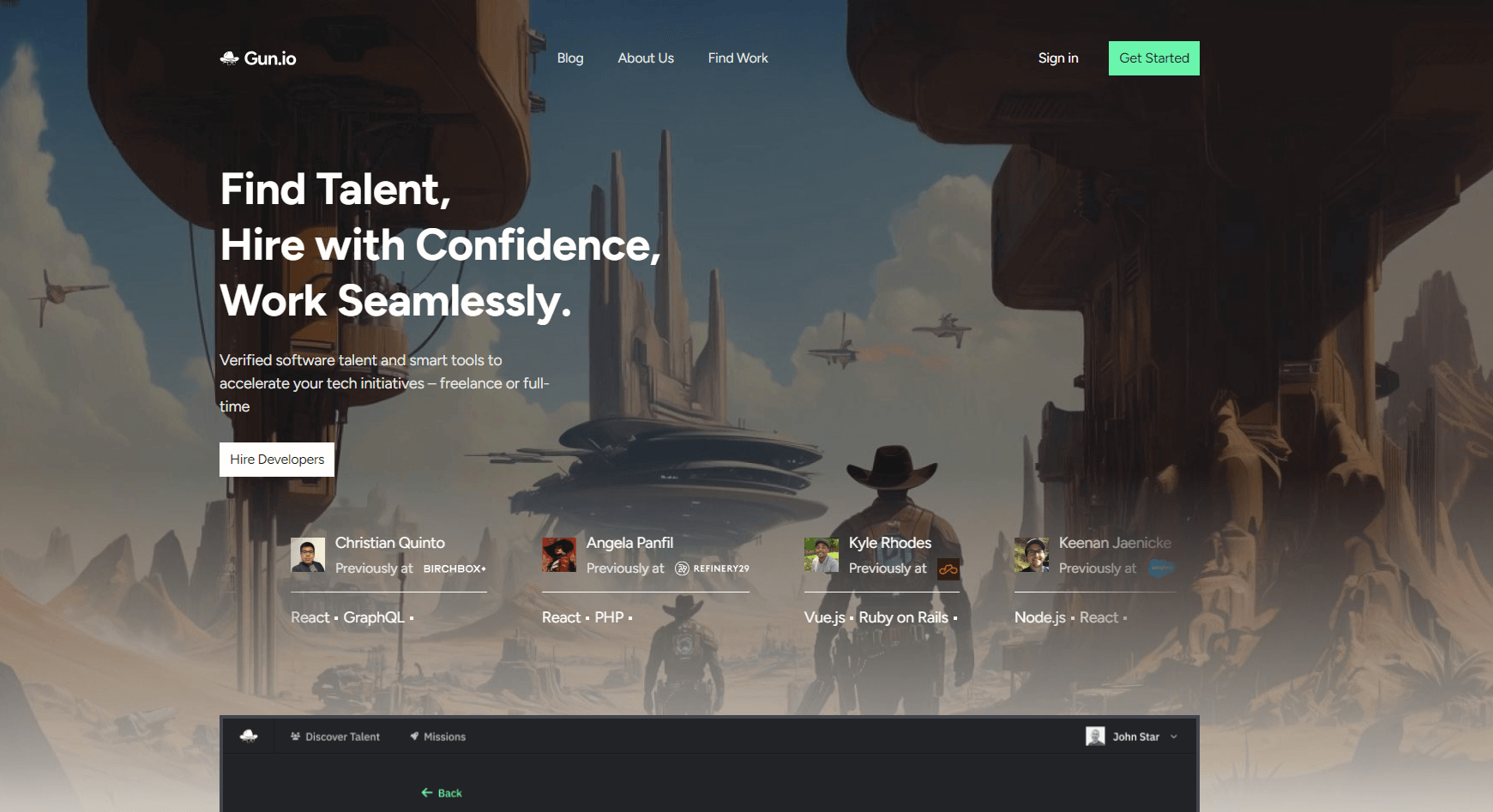
Gun is a US-based technology company focused on helping Startups and businesses build fast, scalable hybrid apps. Their team specializes in cross-platform mobile development, custom software solutions, UI/UX Design, and post-launch support, guiding projects from idea to deployment while ensuring apps are secure, user-friendly, and market-ready.
Best for: Startups and businesses looking for end-to-end hybrid app Development and digital solutions.
Services: Hybrid mobile apps, custom software, UI/UX Design, API integration, and post-launch support.
Average review rating: 4.7+
Most common project size: $20,000 – $150,000
6. BitCot
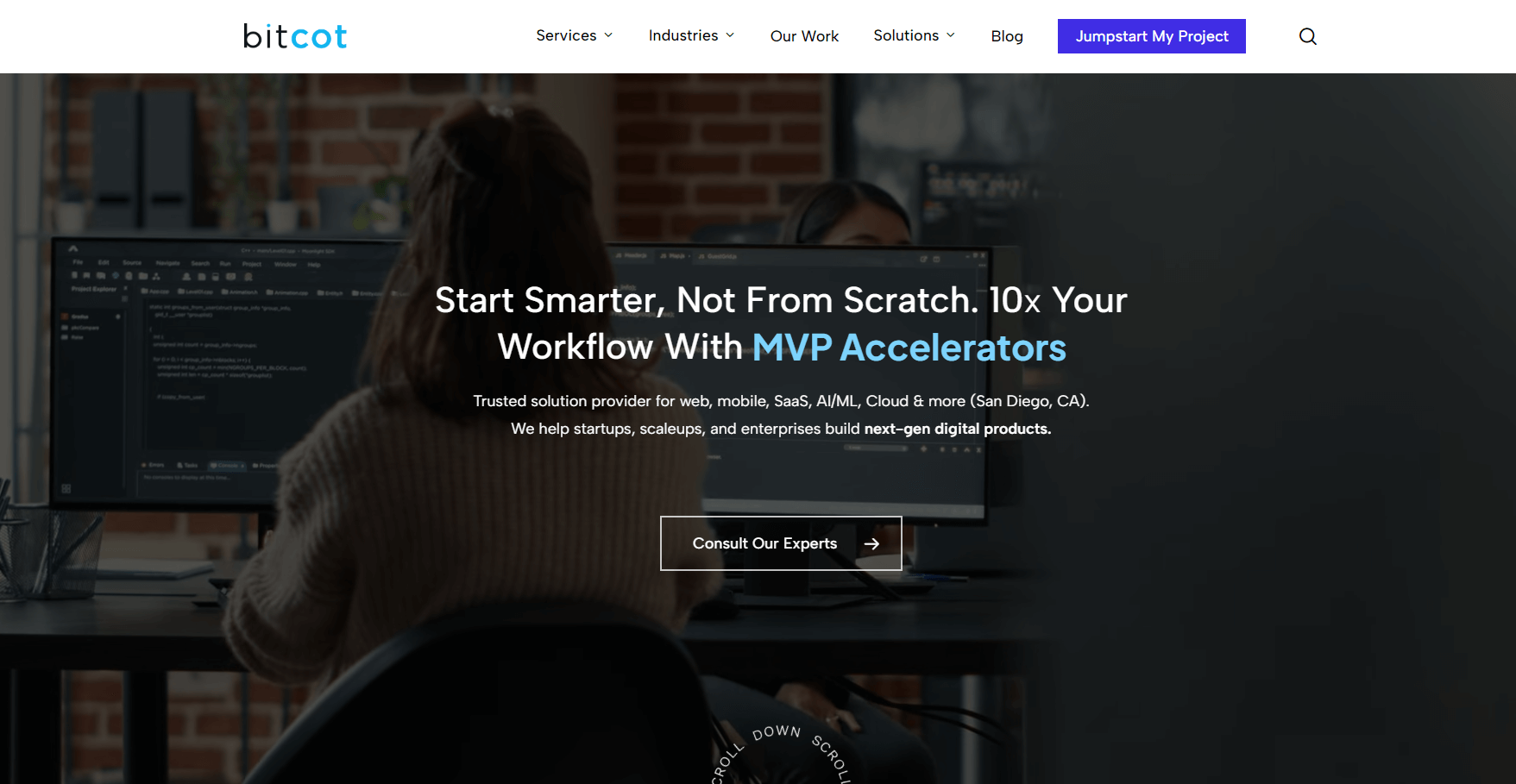
BitCot is a US‑based Digital product studio focused on building innovative, user‑centric hybrid mobile applications for Startups and growing businesses. With a strong emphasis on collaboration, Design excellence, and technical precision, BitCot helps clients turn ideas into engaging cross‑platform apps that perform smoothly on both iOS and Android. Their team works closely with founders to define product goals, craft intuitive UI/UX, and deliver scalable solutions that support long‑term growth.
Best for: Startups and businesses looking for creative hybrid app Development and collaborative product design.
Services: Hybrid mobile app Development, UI/UX Design, product strategy, backend integration, and post‑launch support.
Average review rating: 4.8+
Most common project size: $30,000 – $200,000
7. 4WayTechnologies
4WayTechnologies is a dynamic technology company that supports Startups and businesses in building robust, scalable hybrid mobile applications tailored to modern user needs. With a strong focus on cross‑platform solutions and practical Development strategies, 4WayTechnologies helps clients turn ideas into reliable products that run smoothly on both iOS and Android. Their approach blends technical skill with responsive communication, ensuring projects are delivered on time and aligned with business goals.
Best for: Startups and small to mid‑sized companies seeking hybrid app Development with clear communication and agile delivery.
Services: Hybrid mobile app Development (cross‑platform frameworks), UI/UX Design, custom software solutions, API integration, and post‑launch enhancements.
Average review rating: 4.7+ (based on client satisfaction and project outcomes)
Most common project size: $15,000 – $150,000
8. EmpiricalEdge
EmpiricalEdge is a US‑based technology and Software Development company headquartered in Marlton, New Jersey. With roots dating back to 2007, the firm delivers a range of digital solutions, including hybrid and cross‑platform mobile app Development, custom software, UI/UX Design, backend integration, and full lifecycle support. EmpiricalEdge helps Startups and businesses turn mobile concepts into robust, user‑focused apps that work seamlessly across platforms while ensuring performance, scalability, and long‑term adaptability.
Best for: Startups and businesses seeking reliable hybrid app Development and custom software solutions.
Services: Hybrid mobile apps (React Native, Flutter, Ionic), cross‑platform development, UI/UX Design, API integration, and ongoing support.
Average review rating: 4.7+ (industry‑aligned client feedback)
Most common project size: $20,000 – $180,000
9. Tech.us
Tech.us is a seasoned technology partner headquartered in San Jose, California, with over two decades of experience helping businesses build mobile apps, custom software, and intelligent Digital solutions. Known for its cross‑platform mobile app Development expertise, including hybrid mobile solutions using frameworks like React Native and Flutter, Tech.us supports Startups and enterprises with end‑to‑end development from early planning and UI/UX Design to deployment and ongoing support. Their approach emphasizes scalable architecture, cost efficiency, and practical innovation Designed to help businesses grow in competitive markets.
Best for: Startups and businesses seeking reliable hybrid mobile app Development alongside full‑stack Software and digital transformation services.
Services: Hybrid mobile app Development, custom software, AI/ML solutions, cloud integration, web apps, and post‑launch support.
Average review rating: 4.8+
Most common project size: $25,000 – $200,000+
10. Galaxy Weblinks
Galaxy Weblinks is a US-based technology firm that helps Startups and businesses transform ideas into high-performance, scalable hybrid apps. They specialize in cross-platform mobile app Development, custom software, UI/UX Design, and post-launch support, providing end-to-end solutions from concept to deployment. Their approach focuses on speed, cost-efficiency, and creating user-friendly applications that support business growth.
Best for: Startups and businesses seeking complete hybrid app Development and digital solutions.
Services: Hybrid mobile apps, custom software development, UI/UX Design, API integration, and post-launch support.
Average review rating: 4.8+
Most common project size: $20,000 – $150,000
11. Urolime
Urolime is a dynamic technology firm focused on helping Startups and businesses build user‑centric hybrid mobile applications that perform seamlessly across platforms. With a team that blends creative Design with technical expertise, Urolime supports clients from initial strategy and prototyping through full development and post‑launch enhancements, ensuring apps are both visually engaging and technically robust.
Best for: Startups and companies seeking collaborative hybrid app Development with a strong focus on user experience and performance.
Services: Hybrid mobile app Development (cross‑platform), UI/UX Design, backend integration, MVP builds, and ongoing support.
Average review rating: 4.7+
Most common project size: $20,000 – $150,000
12. Wasabi
Wasabi is a US-based Digital solutions company that helps Startups and businesses create high-performance hybrid mobile applications and scalable digital products. With expertise in cross-platform app Development, UI/UX Design, and end-to-end software solutions, Wasabi supports projects from concept through launch, ensuring apps are secure, user-friendly, and ready to grow with your business.
Best for: Startups and businesses seeking reliable hybrid app Development and full-cycle Digital solutions.
Services: Hybrid mobile apps, custom software, UI/UX Design, API integration, and post-launch support.
Average review rating: 4.8+
Most common project size: $25,000 – $200,000
13. Mobileroadie
Mobileroadie is a US‑oriented app Development partner focused on helping Startups and brands build feature‑rich hybrid mobile apps that engage users and grow audiences. With a strong emphasis on creative Design, user engagement features, and flexible technology, Mobileroadie enables businesses to launch cross‑platform mobile solutions that are visually appealing, easy to maintain, and aligned with long‑term product goals. Their collaborative approach ensures Startups get both strategic support and technical execution from concept through launch and beyond.
Best for: Startups and businesses looking for hybrid app Development with a strong focus on user engagement and design.
Services: Hybrid mobile app Development, cross‑platform solutions, UI/UX Design, feature customization, and support.
Average review rating: 4.7+
Most common project size: $20,000 – $150,000
14. ArcTouch
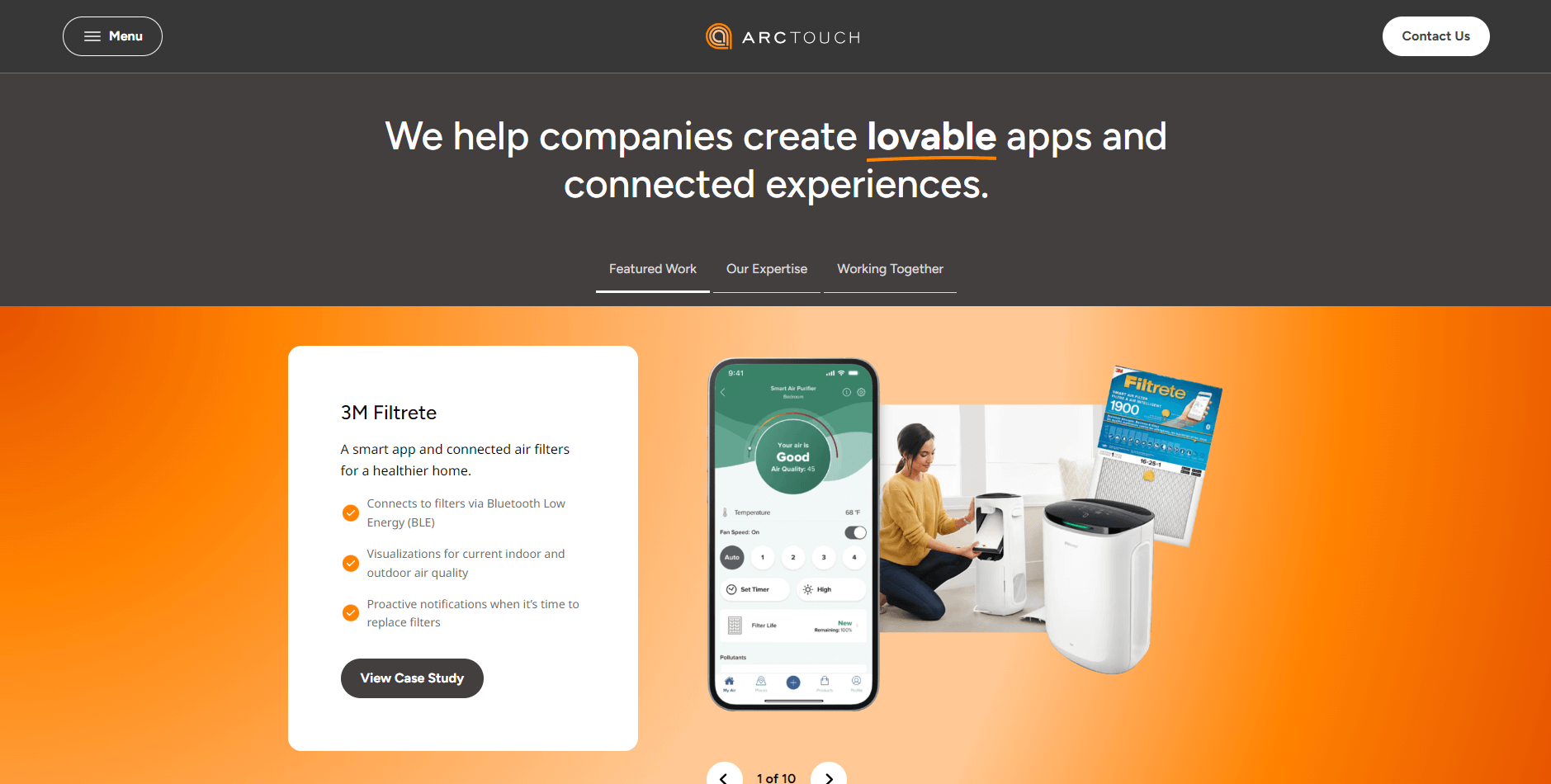
ArcTouch is a San Francisco‑based app Design and development studio that helps Startups and enterprises build engaging, cross‑platform mobile experiences for iOS, Android, and connected devices. With a collaborative, Design‑first approach, ArcTouch focuses on product strategy, UI/UX excellence, and scalable engineering to ensure apps resonate with users and support long‑term growth. Their hybrid capabilities include cross‑platform development using frameworks that deliver reliable performance and seamless experiences. Their work spans industries such as media, travel, healthcare, and consumer tech, making them a versatile choice for Startups looking for a partner who can guide projects from initial concept through to launch and post‑release support.
Best for: Startups and businesses seeking hybrid and cross‑platform mobile app Development with strong Design and product strategy.
Services: Cross‑platform app Development, UI/UX Design, mobile strategy, backend/API integration, and post‑launch support.
Average review rating: 4.7+
Most common project size: $100,000 – $500,000+
15. Door3
Door3 is a US-based technology and digital product company that helps Startups and businesses turn ideas into high-performing, scalable hybrid apps. Specializing in cross-platform mobile development, custom software, UX/UI Design, and product strategy, Door3 works closely with clients from concept through deployment, ensuring apps are secure, user-friendly, and market-ready.
Best for: Startups and businesses looking for end-to-end hybrid app Development and digital product solutions.
Services: Hybrid mobile apps, custom software, UX/UI Design, API integration, and post-launch support.
Average review rating: 4.7+
Most common project size: $30,000 – $200,000
16. Tivix
Tivix is a US‑based technology firm focused on helping Startups and businesses turn ideas into scalable, user‑friendly hybrid mobile applications. With a team experienced in cross‑platform app Development, product design, and agile delivery, Tivix guides clients through every stage of the app journey from early strategy and MVP Development to launch and ongoing enhancements. Their collaborative approach ensures solutions are not just technically sound but also aligned with business goals and market needs.
Best for: Startups and businesses seeking collaborative hybrid app Development and product strategy support.
Services: Hybrid mobile app Development, cross‑platform MVPs, UI/UX Design, API integration, and post‑launch support.
Average review rating: 4.8+
Most common project size: $25,000 – $180,000
17. AppsVolt
AppsVolt is a dynamic hybrid app Development company in the USA that helps Startups and growing businesses bring mobile ideas to life with cross‑platform solutions that work seamlessly on both iOS and Android. Focused on blending technical excellence with practical business value, AppsVolt supports clients from early concept and app Design to full development and post‑launch support. Their approach centers on creating user‑centric hybrid mobile apps that are performance‑driven, scalable, and aligned with long‑term growth goals.
Best for: Startups and companies seeking efficient, scalable hybrid app Development and digital product support.
Services: Hybrid mobile application development, cross‑platform solutions, UI/UX Design, backend integration, and post‑launch maintenance.
Average review rating: 4.8+
Most common project size: $20,000 – $150,000
18. AppMakers USA
AppMakers USA is a technology partner that focuses on helping Startups and businesses build high-quality hybrid mobile apps that perform seamlessly on both iOS and Android. With a practical, solution‑oriented approach, they work closely with clients to turn ideas into scalable, user‑friendly products by combining strategic planning with cross‑platform development expertise.
Best for: Startups and businesses looking for reliable hybrid app Development with strong communication and product focus.
Services: Hybrid mobile app Development, cross‑platform solutions, UI/UX Design, API integration, and ongoing support.
Average review rating: 4.7+
Most common project size: $20,000 – $150,000
19. Suffescom
Suffescom is a US‑oriented Software Development company focused on helping Startups and growing businesses bring their mobile app ideas to life. With a strong focus on hybrid mobile app Development, product strategy, and user‑centric Design, Suffescom works collaboratively with clients to build scalable, secure, and performance‑driven applications that run smoothly across both iOS and Android platforms. Their team emphasizes clear communication, agile workflows, and practical solutions that align technology with business goals.
Best for: Startups and businesses looking for dependable hybrid app Development with end‑to‑end support.
Services: Hybrid mobile app Development, UI/UX Design, custom software solutions, API integration, and ongoing maintenance.
Average review rating: 4.7+
Most common project size: $20,000 – $180,000
Hybrid vs. Native vs. Cross-Platform Apps: A Complete Guide for Startups
Choosing the right mobile app Development approach is one of the most critical decisions a Startup can make. With countless options available, it’s easy to get lost in terminology like native apps, hybrid apps, or cross-platform apps. Each approach comes with its own set of advantages, disadvantages, and ideal use cases, which can significantly impact your development budget, timeline, scalability, and user experience. This guide will help you understand the key differences and make an informed decision for your Startup.
Understanding Mobile App Types
Native Apps
Native apps are built specifically for one platform, iOS or Android, using the platform’s official programming languages. For iOS, developers use Swift or Objective-C, and for Android, Kotlin or Java is standard. These apps are installed directly on the device and optimized for that operating system.
Key Advantages of Native Apps:
- High Performance: Native apps leverage device hardware directly, delivering faster load times and smoother interactions.
- Optimized UX: They follow platform-specific Design guidelines, ensuring a seamless user experience.
- Complete Access to Device Features: Native apps can fully use cameras, sensors, GPS, push notifications, and other hardware functionalities.
- Enhanced Security: Native apps generally adhere to platform-specific security standards, making them more secure for sensitive data applications.
Challenges:
- High Development Cost: Separate apps must be developed for iOS and Android, often doubling the cost.
- Longer Development Time: Building two separate codebases increases the project timeline.
- Maintenance Complexity: Updates and bug fixes must be applied individually to each platform.
Ideal Use Cases:
- Gaming apps
- High-security applications (e.g., banking and fintech apps)
- AR/VR applications
- Apps requiring heavy device integration
Hybrid Apps
Hybrid apps are developed using web technologies like HTML, CSS, and JavaScript, then wrapped in a native container using frameworks like Ionic, Cordova, or Capacitor. These apps can run on both iOS and Android with a single codebase.
Advantages of Hybrid Apps:
- Cost-Effective: One codebase works across platforms, reducing Development expenses.
- Rapid Deployment: Startups can launch apps on multiple platforms simultaneously.
- Easier Maintenance: Updates and bug fixes are applied to a single codebase.
- Offline Functionality: Hybrid apps can store local data for offline use.
Disadvantages:
- Performance Limitations: May lag behind native apps for graphics-intensive or computation-heavy tasks.
- Limited Access to Device Features: Some native capabilities require additional plugins or custom solutions.
- UX Inconsistencies: Hybrid apps may not always match platform-specific Design patterns, potentially affecting user satisfaction.
Ideal Use Cases:
- E-commerce applications
- News and content delivery apps
- Basic productivity tools
- Minimum Viable Products (MVPs) for Startups
Cross-Platform Apps
Cross-platform apps are built using frameworks like Flutter or React Native, which allow a single codebase to produce native-like apps for both iOS and Android. Unlike hybrid apps, they compile to native code for better performance.
Advantages:
- Near-Native Performance: Apps run almost like native apps, even for complex interactions.
- Single Codebase: Reduces Development and maintenance costs.
- Rich UI/UX Capabilities: Supports advanced UI, gestures, and animations.
- Active Developer Community: Access to a wide range of plugins and libraries.
Disadvantages:
- Learning Curve: Complex features may still require platform-specific adjustments.
- Framework Dependency: Updates in the framework may occasionally break apps.
- Larger App Size: The Initial app download size may be larger than native apps.
Ideal Use Cases:
- SaaS applications
- Social media apps
- Startups want faster multi-platform deployment without compromising on performance
Detailed Comparison
| Feature | Native | Hybrid | Cross-Platform |
| Performance | Excellent | Moderate | High (near-native) |
| Development Cost | High | Low | Medium |
| Time-to-Market | Long | Short | Medium |
| User Experience | Best | Good | Very Good |
| Access to Device Features | Full | Limited | Mostly Full |
| Maintenance | Separate per platform | Single codebase | Single codebase |
| Ideal for | Gaming, AR/VR, fintech | E-commerce, simple apps | SaaS, social apps, Startup MVPs |
Why Choose Hybrid App Development
In today’s fast-paced Digital world, Startups and businesses face constant pressure to launch products quickly while keeping costs under control. Hybrid app Development has emerged as a preferred solution for companies looking to reach a wide audience on both iOS and Android platforms without duplicating effort. But why exactly should you choose hybrid app Development over native or other alternatives?
1. Faster Time-to-Market
One of the biggest advantages of hybrid app Development is speed. With a single codebase that runs on multiple platforms, developers can build apps faster compared to creating separate native applications for iOS and Android. This allows Startups to launch their MVPs quickly, gather user feedback, and iterate faster, which is crucial in the early stages of a business.
2. Cost-Effective Development
Developing two separate native apps can be expensive, particularly for Startups with limited budgets. Hybrid app Development significantly reduces costs because it requires less Development effort and fewer resources. By maintaining a single codebase, companies can also reduce long-term maintenance expenses, making hybrid apps a budget-friendly choice without compromising quality.
3. Cross-Platform Compatibility
Hybrid apps are Designed to work seamlessly across multiple platforms, including iOS, Android, and sometimes even web applications. This cross-platform capability ensures that your product reaches a wider audience, maximizes user engagement, and maintains consistent functionality and appearance across devices.
4. Easy Maintenance and Updates
Since hybrid apps share a single codebase, implementing updates or bug fixes becomes much simpler and faster. Instead of updating multiple versions of the app, developers can make changes once, and they automatically apply across all platforms. This streamlines maintenance, reduces downtime, and ensures users always have access to the latest features.
5. Scalability and Flexibility
Hybrid apps are highly scalable, making them ideal for Startups that expect rapid growth. Whether you want to add new features, expand to additional platforms, or integrate third-party services, hybrid development frameworks like Flutter, React Native, or Ionic provide the flexibility to scale efficiently.
6. Enhanced User Experience
Modern hybrid app frameworks allow developers to create apps that look and feel like native applications. With smooth animations, responsive interfaces, and native-like performance, users rarely notice any difference between a hybrid app and a native one. This ensures that Startups can deliver professional, engaging experiences without the need for separate Development teams.
7. Support for MVP and Experimentation
Startups often need to test ideas quickly before committing significant resources. Hybrid app Development is ideal for building Minimum Viable Products (MVPs) because it allows rapid prototyping and iteration. This means founders can validate their concepts, collect real-world user feedback, and make data-driven improvements without spending excessively on multiple native apps.
8. Strong Frameworks and Community Support
Hybrid Development is backed by mature frameworks and large developer communities. Tools like React Native, Flutter, and Ionic provide rich libraries, plugins, and ready-to-use components, helping Startups accelerate Development while ensuring reliability and security. Additionally, community support allows developers to resolve issues quickly and implement best practices efficiently.
9. Future-Ready Technology Choice
Hybrid apps are evolving constantly with advancements in cross-platform technologies. By choosing hybrid development, Startups are investing in a flexible solution that can adapt to future technology changes, integrate emerging features like AR/VR or AI, and stay competitive in an ever-changing Digital ecosystem.
Conclusion
Hybrid app Development offers Startups and businesses a smart, efficient way to reach users across multiple platforms without the high costs and development time associated with building separate native apps. By combining web technologies with native components, hybrid apps can deliver a smooth user experience, quick performance, and scalability, all while allowing companies to launch faster and iterate based on real user feedback.
Many of the apps you use every day, like Instagram, Gmail, and Uber, leverage hybrid technology to provide seamless functionality on both iOS and Android. This demonstrates that hybrid development is not just cost-effective but also proven at scale.
Choosing the right hybrid app Development partner can make a significant difference. Experienced companies guide Startups through MVP creation, agile development, UI/UX optimization, and post-launch support, ensuring apps not only launch successfully but are prepared to grow with the business.
For Startups aiming to enter the market quickly, reduce costs, and build scalable solutions, hybrid apps are a compelling choice. By partnering with a reputable hybrid app Development company, businesses can transform their ideas into high-performing, user-friendly apps that meet both customer expectations and investor requirements.