Web App Development
  Cloud App Development
  Front-End Development
  Cross Platform Development
  MVP Development
  Application Modernization
  PWA Development
  SaaS Application Development
  Software Development Outsourcing
  Offshore Custom Software Development
  Full Stack Software Development
  Custom Software Development
  Enterprise Software Development
  Cloud Computing Solutions
  Cloud Development
  Managed Cloud Services
  Cloud Native Development
  AI Consulting
  Machine Learning Development
  LLM Development
  AI Chatbot Development
  Data Analytics
  CI CD Development
  Digital Transformation
  Dev Ops
  Content Development
  Blockchain Development
  Web Development
  Web Design



 Generative AI
  Large Language Model
  AI Chatbot
  AngularJs
  ReactJS
  Dotnet Core
  Android
  iPhone
  Swift
Swift  E-Commerce
  NopCommerce
  BigCommerce
  Laravel
  Yii
Yii  AWS
AWS  Google Cloud
  Azure DevOps
  Automation Testing
  Security Testing
  API Testing
  Functional Testing
  MEAN Stack
  MERN Stack
  Full Stack Developers
  biz.encodedots
  biz@encodedots.com
  +91 99747 42737



- What Is an Android App Development Company?
- Core Role and Responsibilities
- Types of Android App Development Services
- Benefits of Hiring an Android App Development Company
- Android App Development Process Explained
- Why to Choose the Right Android App Development Company
- Cost of Hiring an Android App Development Company
- Future Trends in Android App Development
- Why the Right Development Partner Matters
- Conclusion
- Android App Development FAQs
In today’s mobile-driven world, having a strong Digital presence isn’t optional anymore; it’s a business necessity. Over 70% of global internet traffic now comes from mobile devices, and Android alone holds more than 70% of the worldwide smartphone market share. That means millions of potential customers are interacting, shopping, and making decisions directly from their Android phones every day. Businesses that fail to meet users where they are risk losing visibility, engagement, and ultimately revenue.
Mobile apps have become powerful tools for building customer loyalty, simplifying operations, and creating new business opportunities. From eCommerce and healthcare to fintech, education, and logistics, companies are increasingly investing in Android apps to enhance customer experiences and stay competitive in fast-moving markets. A well-Designed app doesn’t just improve accessibility; it can boost customer retention, streamline workflows, and open entirely new revenue channels.
This is where an experienced Android app Development company becomes essential. Beyond just coding an app, these experts help businesses design user-friendly interfaces, ensure strong security, optimize performance, and build scalable solutions that grow alongside business needs. Whether you’re a Startup launching your first mobile product or an enterprise accelerating Digital transformation, the right development partner can make the difference between an average app and a successful Digital asset.
Before choosing an Android Development partner, it’s important to understand what services they offer, Why the development process works, expected costs, and what factors influence app success. Making informed decisions early can help avoid costly mistakes, reduce Development risks, and ensure your app delivers real business value. This guide will walk you through everything you need to know before hiring an Android app Development company.
What Is an Android App Development Company?
An Android app Development company is a specialized technology partner that helps businesses design, build, launch, and continuously improve mobile applications specifically for Android devices. But in today’s competitive Digital environment, their role goes far beyond coding an app; they help businesses turn mobile technology into a strategic growth tool.
With billions of Android users worldwide, companies across industries, from Startups and e-commerce brands to healthcare providers and enterprises, rely on professional Android developers to create reliable, scalable, and user-friendly mobile solutions. A well-developed Android app can improve customer engagement, streamline operations, strengthen brand presence, and even open new revenue channels.
What differentiates a professional Android app Development company from freelancers or basic development teams is their structured approach and multidisciplinary expertise. They bring together business analysts, UI/UX Designers, developers, QA specialists, cloud experts, and project managers who collaborate throughout the app lifecycle. This ensures the app isn’t just functional but aligned with business objectives, market demands, and user expectations.
Another defining aspect is strategic involvement. Experienced Development companies don’t simply build what clients request; they advise on features, scalability, security, performance optimization, and emerging technologies. Whether it’s integrating AI-driven features, cloud infrastructure, or real-time analytics, their goal is to future-proof the application while maximizing ROI.
Security, performance, and device compatibility are also critical. Android runs on thousands of device types and OS versions, which requires careful optimization. Professional companies ensure applications perform consistently, handle increasing user loads, protect sensitive data, and remain adaptable as technology evolves.
Ultimately, an Android app Development company acts as both a technical execution partner and a digital strategy advisor. Their expertise helps businesses move faster, reduce Development risks, and deliver mobile experiences that truly support growth.
Core Role and Responsibilities
The responsibilities of an Android app Development company extend across the entire mobile app lifecycle, from initial concept validation to post-launch optimization. Their primary objective is not just to build an app but to ensure it delivers measurable business value.
One of the most critical responsibilities is discovery and strategic planning. Before Development begins, experienced companies conduct requirement analysis, competitor research, user behavior studies, and technical feasibility assessments. This prevents costly mistakes later and ensures the app is built with clear business goals in mind.
UI/UX Design is another major responsibility. Modern users expect intuitive navigation, fast performance, and visually appealing interfaces. Professional companies invest heavily in usability research, prototyping, and user testing to create apps that users enjoy interacting with, which directly impacts retention and customer satisfaction.
Development itself involves much more than coding screens. It includes backend architecture, API integrations, cloud connectivity, data security implementation, and performance optimization. Skilled developers ensure the app functions smoothly across different devices while maintaining speed, reliability, and stability.
Quality assurance is equally important. Rigorous testing, including functionality testing, performance testing, security checks, and device compatibility testing, ensures the app works flawlessly before release. This protects brand reputation and minimizes post-launch issues.
Post-launch support is often underestimated but extremely important. Android updates frequently, user expectations evolve, and businesses continuously add new features. A reliable development company provides ongoing maintenance, updates, performance monitoring, and technical support to keep the app competitive and secure.
In many cases, these companies also serve as long-term innovation partners, helping businesses adapt to changing technology trends such as AI integration, IoT connectivity, or advanced analytics.
Types of Android App Development Services
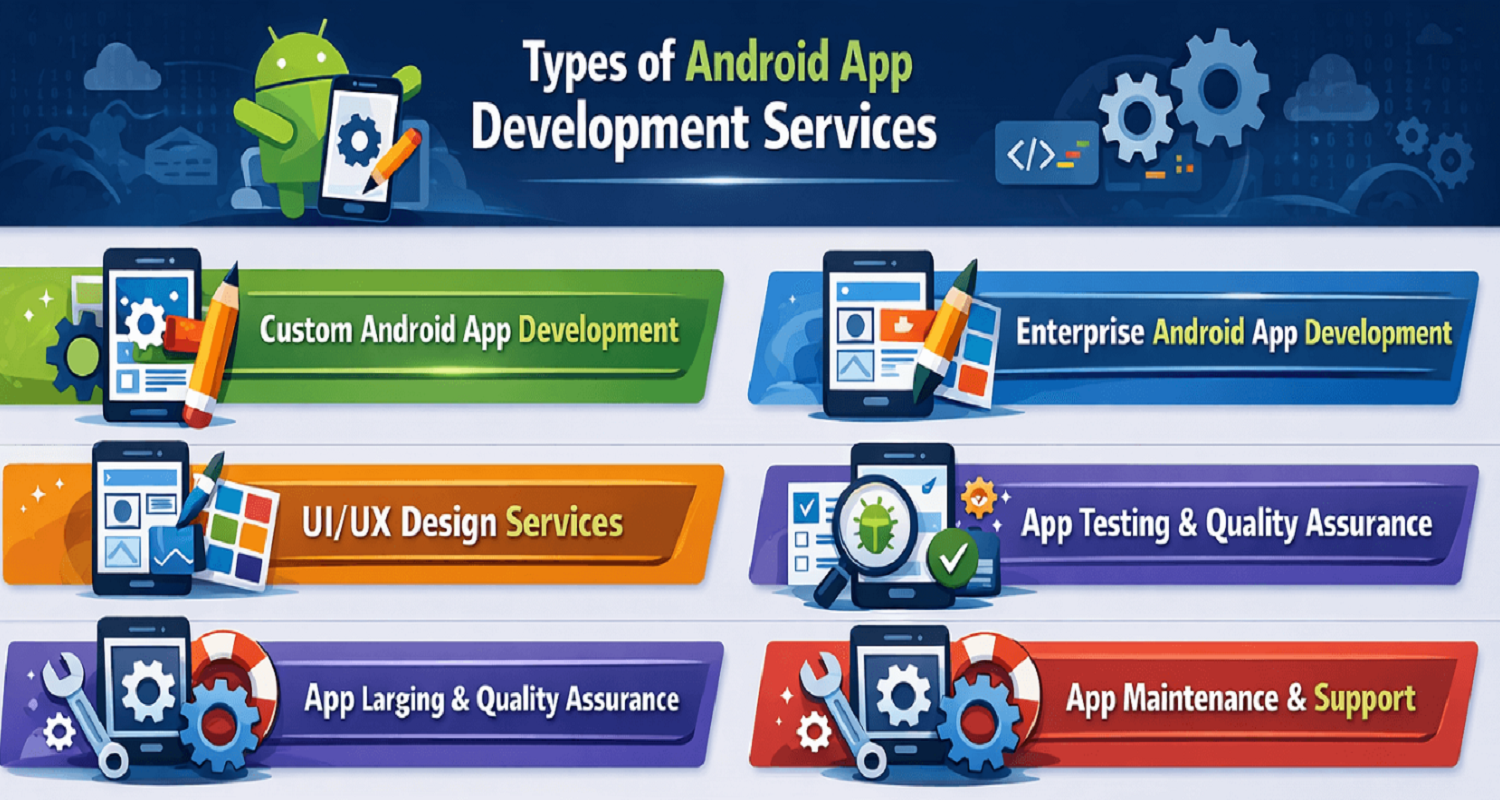
Android app Development companies provide a wide range of services tailored to different business goals, industries, and technical requirements. These services go beyond simple app creation; they focus on building scalable, secure, and user-friendly mobile solutions that support long-term business growth. From custom development to modernization and ongoing maintenance, professional Android Development companies ensure applications remain competitive in an evolving Digital landscape.
Custom Android App Development
Custom Android app Development is one of the most in-demand services for businesses looking to create unique Digital products. Instead of using generic, ready-made solutions, companies invest in custom apps Designed specifically for their workflows, target audience, and business objectives.
This approach allows businesses to build personalized features, integrate advanced technologies, and create strong brand differentiation. Custom apps also offer better scalability, making it easier to expand functionality as business needs evolve.
Enterprise Android App Development
Enterprise app Development focuses on building internal applications that improve operational efficiency, employee productivity, and business communication. These apps are typically Designed for secure data handling, seamless system integration, and high performance.
Examples include CRM integrations, logistics tracking apps, internal communication tools, and workflow automation solutions. Enterprise Android apps help organizations streamline processes, reduce manual work, and enhance decision-making capabilities.
UI/UX Design Services
User experience plays a critical role in app success. UI/UX Design services focus on creating visually appealing, intuitive, and easy-to-navigate applications that enhance user engagement.
This includes user research, wireframing, prototyping, interface design, and usability testing. A well-Designed app not only improves customer satisfaction but also strengthens brand perception and retention rates.
App Testing and Quality Assurance
Quality assurance ensures that an Android app performs reliably before it reaches users. Professional testing services include functional testing, performance optimization, security audits, device compatibility checks, and bug identification.
Thorough testing minimizes technical issues, prevents negative user experiences, and protects brand reputation. It also ensures smooth app store approval and stable performance after launch.
App Maintenance and Support
Launching an app is just the beginning. Continuous maintenance and support are essential to keep applications secure, updated, and aligned with evolving technology trends.
This includes regular updates, performance monitoring, security patches, feature enhancements, and compatibility updates for new Android versions and devices. Ongoing support helps businesses maintain app performance and user satisfaction over time.
Legacy App Modernization and Migration
Many businesses operate older applications that struggle with performance, security, or compatibility issues. Modernization and migration services help upgrade these legacy apps using modern frameworks, improved Design standards, and updated technologies.
This ensures better performance, enhanced security, improved user experience, and future scalability without requiring a complete rebuild.
Benefits of Hiring an Android App Development Company
Building a successful Android app goes far beyond writing code. It involves strategic planning, intuitive user experience design, strong security practices, scalable architecture, performance optimization, and ongoing maintenance. Many businesses initially assume mobile app Development is straightforward, only to encounter delays, technical challenges, or unexpected costs later.
This is why partnering with a professional Android app Development company often becomes a smart business investment rather than just a technical requirement. Experienced Development partners bring structured workflows, proven methodologies, industry insights, and specialized technical expertise that reduce risks while improving overall app quality.
Whether you’re launching a Startup app, modernizing an existing product, or building an enterprise-level mobile solution, the right development company ensures your application is reliable, future-ready, and aligned with your business objectives.
Let’s explore the key benefits in detail.
Technical Expertise and Experience
One of the most valuable advantages of hiring an Android app Development company is access to deep technical expertise and real-world experience. Building a successful Android app requires far more than basic coding skills it demands knowledge of evolving technologies, performance optimization, user behavior, security practices, and platform guidelines.
Professional Android developers work with technologies like Kotlin, Java, Android SDKs, APIs, cloud integrations, and modern frameworks daily. This continuous exposure helps them anticipate challenges before they become problems and ensures your app is built using proven industry standards.
Their experience helps in:
- Identifying technical risks early and preventing costly mistakes
- Following best coding practices for stability and performance
- Ensuring seamless compatibility across multiple Android devices and OS versions
- Optimizing speed, responsiveness, and user experience
Experienced teams also stay updated with emerging trends such as AI-powered features, IoT integrations, advanced analytics, and modern security frameworks. This means your app won’t just function it will remain competitive and future-ready.
From intuitive UI/UX Design to strong backend architecture, every aspect benefits from professionals who have handled diverse projects and understand what truly works in real business scenarios.
Cost Efficiency
Many businesses initially assume hiring a professional Android app Development company is expensive. However, when you look at the bigger picture, it often turns out to be a cost-saving decision.
Poorly developed apps can lead to performance issues, security vulnerabilities, redesign costs, and lost customers, all of which are far more expensive than investing in expert development from the start.
Working with professionals helps reduce costs by:
- Minimizing Development errors and rework
- Delivering projects faster, reducing operational delays
- Designing a scalable architecture that avoids future reDevelopment
- Conducting thorough testing to prevent costly post-launch fixes
Additionally, established Development companies provide transparent pricing models, clear timelines, and well-defined deliverables. This clarity allows businesses to plan budgets confidently without hidden surprises.
There’s also an indirect financial benefit: when experienced developers handle the technical side, your internal team can stay focused on growth strategies, marketing initiatives, and customer engagement rather than troubleshooting technical issues.
Faster Development Process
In today’s fast-moving Digital market, speed can be a competitive advantage. A delayed app launch can mean missed opportunities, slower customer acquisition, and falling behind competitors.
Professional Android app Development companies follow structured and efficient workflows that accelerate Development while maintaining high quality. These typically include:
- Agile Development methodologies for flexibility and speed
- Pre-tested frameworks and reusable code components
- Dedicated project managers for smooth coordination
- Continuous testing to catch issues early
This organized approach reduces bottlenecks and keeps projects moving steadily toward completion.
Another major advantage is strategic feature prioritization. Experienced teams focus on building high-impact features first instead of overloading the app with unnecessary functionality. This ensures faster time-to-market without compromising usability or performance.
Quicker Development cycles also enable faster feedback from users, helping businesses adapt quickly and continuously improve their apps.
Scalability and Security
A successful app should grow alongside your business. Scalability ensures your app can handle increased users, new features, and evolving business needs without performance issues.
Professional Android app Development companies build applications with future growth in mind. This includes:
- Scalable backend infrastructure
- Cloud-ready architecture for flexibility
- Performance optimization for higher traffic loads
- Easy integration of new features and updates
Security is equally critical. With rising cybersecurity threats and increasing data privacy concerns, users expect apps to protect their personal information.
Experienced developers implement robust security measures such as:
- Data encryption and secure communication protocols
- Strong authentication and authorization systems
- Regular security testing and vulnerability assessments
- Compliance with industry standards and privacy regulations
A secure, scalable app not only protects your business but also builds trust with users. And in today’s competitive app marketplace, trust often determines long-term success.
Android App Development Process Explained
Developing a successful Android app is more than coding; it’s about turning an idea into a reliable digital product that users trust and enjoy. A well-defined Development process helps ensure the app performs smoothly, meets business goals, and delivers a seamless user experience. From initial planning to post-launch improvements, every stage plays a crucial role in building a high-quality Android application.
Requirement Analysis
Every strong app begins with a deep understanding of business objectives and user needs. This phase focuses on gathering detailed requirements, defining the app’s purpose, identifying target users, and outlining essential features.
Experienced Android Development teams typically conduct stakeholder discussions, competitor analysis, and feasibility assessments during this stage. The goal is to eliminate ambiguity early, reduce risks, and create a clear roadmap for development.
When requirement analysis is done correctly, it honestly saves time, prevents costly revisions, and ensures the final product aligns perfectly with business expectations.
Design and Prototyping
Once requirements are clear, the focus shifts to Designing the user experience. This stage isn’t just about making the app visually appealing; it’s about ensuring usability, clarity, and engagement.
Designers create wireframes, UI mockups, and interactive prototypes that show Why the app will look and behave. These prototypes allow stakeholders to visualize the user journey before Development begins, helping refine navigation, layout, and functionality early in the process.
A thoughtful Design phase improves user satisfaction, strengthens brand perception, and increases the chances of long-term app adoption.
Development Phase
This is where planning and design transform into a functional Android application. Developers start coding using modern frameworks, Development tools, and best practices to ensure scalability, security, and performance.
Professional teams often follow agile development methods, delivering the app in iterative cycles. This allows continuous feedback, faster adjustments, and better alignment with evolving business needs.
During Development, key priorities include code quality, app performance, API integrations, security standards, and compatibility across Android devices. A structured Development approach ensures the app remains stable and future-ready.
Testing and Deployment
Before launching, rigorous testing ensures the app functions reliably across different devices, screen sizes, and Android versions. Quality assurance specialists evaluate functionality, usability, performance, and security to detect and fix potential issues.
Testing minimizes risks such as crashes, slow performance, or security vulnerabilities that could harm user trust.
After successful testing, the app is prepared for deployment on the Google Play Store. This includes optimization, compliance checks, and launch support to ensure a smooth release process.
Post-Launch Support
Launching the app is only the beginning of its lifecycle. Continuous monitoring, updates, and improvements are essential to maintain performance and user satisfaction.
Post-launch support typically includes bug fixes, feature enhancements, security updates, and compatibility adjustments with new Android OS versions. Regular updates also help keep users engaged and improve app ratings over time.
Ongoing support ensures the app remains competitive, secure, and aligned with evolving user expectations and business goals.
website or blog.
Why to Choose the Right Android App Development Company
Choosing the right Android app Development company is one of the most critical decisions for any business planning to launch a mobile application. A well-developed app can enhance customer engagement, streamline operations, and generate new revenue streams. However, selecting the wrong Development partner can lead to budget overruns, poor performance, security vulnerabilities, and missed market opportunities.
The global mobile app market continues to grow rapidly, with billions of Android users worldwide. This intense competition means businesses must prioritize quality, scalability, user experience, and long-term maintainability when choosing a development partner. A reliable Android app Development company doesn’t just build an app; it becomes a strategic partner that understands your business goals, user expectations, and future growth plans.
Before making your final decision, here are the most important factors you should carefully evaluate.
Portfolio and Industry Experience
A company’s portfolio is often the clearest indicator of its capabilities. Reviewing previous projects helps you assess not only Design quality but also technical complexity, industry exposure, and problem-solving ability.
Look beyond visuals and focus on:
- App performance and usability
- Industry diversity and domain expertise
- Innovation in features and functionality
- Complexity of projects handled
- Long-term app success stories
Experienced Android developers tend to anticipate challenges early, whether related to device compatibility, performance optimization, or security requirements. This proactive approach reduces Development risks and improves overall project efficiency.
Companies with cross-industry experience also bring fresh perspectives, helping create apps that stand out rather than replicate existing solutions.
Technical Expertise and Modern Development Practices
Android Development evolves continuously. New frameworks, Design principles, and performance standards emerge regularly. The right development company should stay updated with modern technologies while choosing solutions that align with your business objectives.
Key areas to evaluate include:
- Native Android Development expertise (Kotlin, Java)
- Cross-platform capabilities when needed
- Cloud integration and backend scalability
- API integrations and third-party services
- App security and data protection practices
- Performance optimization techniques
Strong technical expertise ensures your app remains stable, secure, and adaptable as user expectations and technology trends evolve. The best companies focus on practical solutions rather than unnecessary complexity, balancing innovation with reliability.
Client Reviews, Reputation, and Credibility
Client feedback provides real insight into Why a development company operates beyond its marketing claims. Testimonials, independent reviews, and case studies can reveal important details such as:
- Communication effectiveness
- Delivery timelines and reliability
- Problem-solving ability
- Transparency in pricing and processes
- Quality of post-launch support
Consistently positive feedback often reflects strong professionalism and customer satisfaction. If possible, review third-party platforms, request references, or explore detailed case studies to understand Why the company handles real-world projects.
Reputation matters because app Development is rarely a one-time engagement; updates, scaling, and maintenance are ongoing.
Communication, Transparency, and Collaboration
Even highly skilled developers can struggle if communication is unclear. Smooth collaboration ensures expectations remain aligned, feedback cycles are efficient, and potential issues are addressed early.
A reliable Android app Development company should provide:
- Regular progress updates
- Dedicated project managers or contact points
- Clear documentation and reporting
- Agile Development practices
- Responsive support channels
Transparent communication reduces misunderstandings, accelerates decision-making, and improves overall project outcomes. Strong collaboration also fosters trust, which is essential for long-term partnerships.
Post-Launch Support and Scalability Planning
Launching the app is only the beginning. Ongoing updates, performance monitoring, security patches, and feature enhancements are necessary to keep the app competitive.
Evaluate whether the company offers:
- Maintenance and support packages
- Performance monitoring tools
- Version upgrades and compatibility updates
- Security audits and bug fixes
- Scalability planning for future growth
Businesses that overlook post-launch support often face increased costs later due to technical debt or outdated architecture.
Cost vs Value (Not Just Budget)
While budget considerations are important, choosing the lowest-cost provider can be risky. Poor Development quality often leads to higher long-term expenses through redesigns, fixes, or lost market opportunities.
Instead, focus on:
- Overall value delivered
- Transparency in pricing
- Development methodology
- Long-term ROI potential
A reputable Development partner prioritizes quality, scalability, and business impact rather than simply delivering the cheapest solution.
Cost of Hiring an Android App Development Company
One of the first questions businesses ask before building an Android app is simple: “How much will it cost?” The honest answer is it depends. Android app Development isn’t a fixed-price service because every app has different goals, complexity levels, and technical requirements.
From simple Startup MVPs to large enterprise apps, costs can vary widely. What truly matters is understanding where your money goes and Why to invest wisely, rather than just looking for the cheapest option. A well-built app delivers long-term ROI through better user engagement, brand visibility, and operational efficiency.
Companies that focus only on low upfront costs often end up paying more later in maintenance, redesigns, or performance fixes. That’s why smart businesses treat app Development as a strategic investment, not just an expense.
| Category | Point | Detailed Explanation |
| Cost Overview | Cost Depends on Multiple Factors | Android app Development does not have fixed pricing because every app differs in goals, complexity, and technical requirements. |
| Cost Overview | Cost Variation by App Type | Costs range from simple Startup MVP apps to complex enterprise-level applications. |
| Cost Overview | Strategic Investment | Businesses should focus on where money is invested rather than just finding the cheapest option. |
| Cost Overview | Long-Term ROI | A well-built app improves user engagement, brand visibility, operational efficiency, and long-term returns. |
| Cost Overview | Risk of Cheap Development | Choosing low-cost Development can lead to higher future costs in maintenance, redesigns, or performance fixes. |
| Cost Factors | App Complexity & Features | Simple apps cost less, while apps with AI, real-time sync, payment gateways, or custom dashboards require more Development time. |
| Cost Factors | UI/UX Design Importance | Modern users expect intuitive, fast, and visually appealing apps; good Design improves engagement but increases cost. |
| Cost Factors | Developer Expertise | Experienced developers charge more but deliver better quality, scalability, security, and faster project completion. |
| Cost Factors | Backend Infrastructure | Cloud storage, APIs, databases, and third-party integrations add backend development complexity and cost. |
| Cost Factors | Testing & Quality Assurance | Thorough testing ensures smooth performance across devices and OS versions; skipping QA can damage user trust. |
| Cost Factors | Post-Launch Maintenance | Ongoing updates, security patches, performance improvements, and feature additions require continuous investment. |
| Budget Planning | Clear Goal Definition | Clearly defining the app’s purpose prevents scope creep and unexpected expenses. |
| Budget Planning | MVP Approach | Launching a Minimum Viable Product allows businesses to test the market before large investments. |
| Budget Planning | Feature Prioritization | Focus on essential features first; additional features can be added later. |
| Budget Planning | Long-Term Budget Planning | Include maintenance, updates, marketing, scaling, and future enhancements in the budget. |
| Budget Planning | Value Over Low Pricing | Lowest quotes are not always best; experience, transparency, and strong client reviews matter more. |
| Budget Planning | Communication With Developers | Regular check-ins with the development team prevent misunderstandings and help keep budgets under control. |
Read More: Guide to mobile App Development Cost
Future Trends in Android App Development
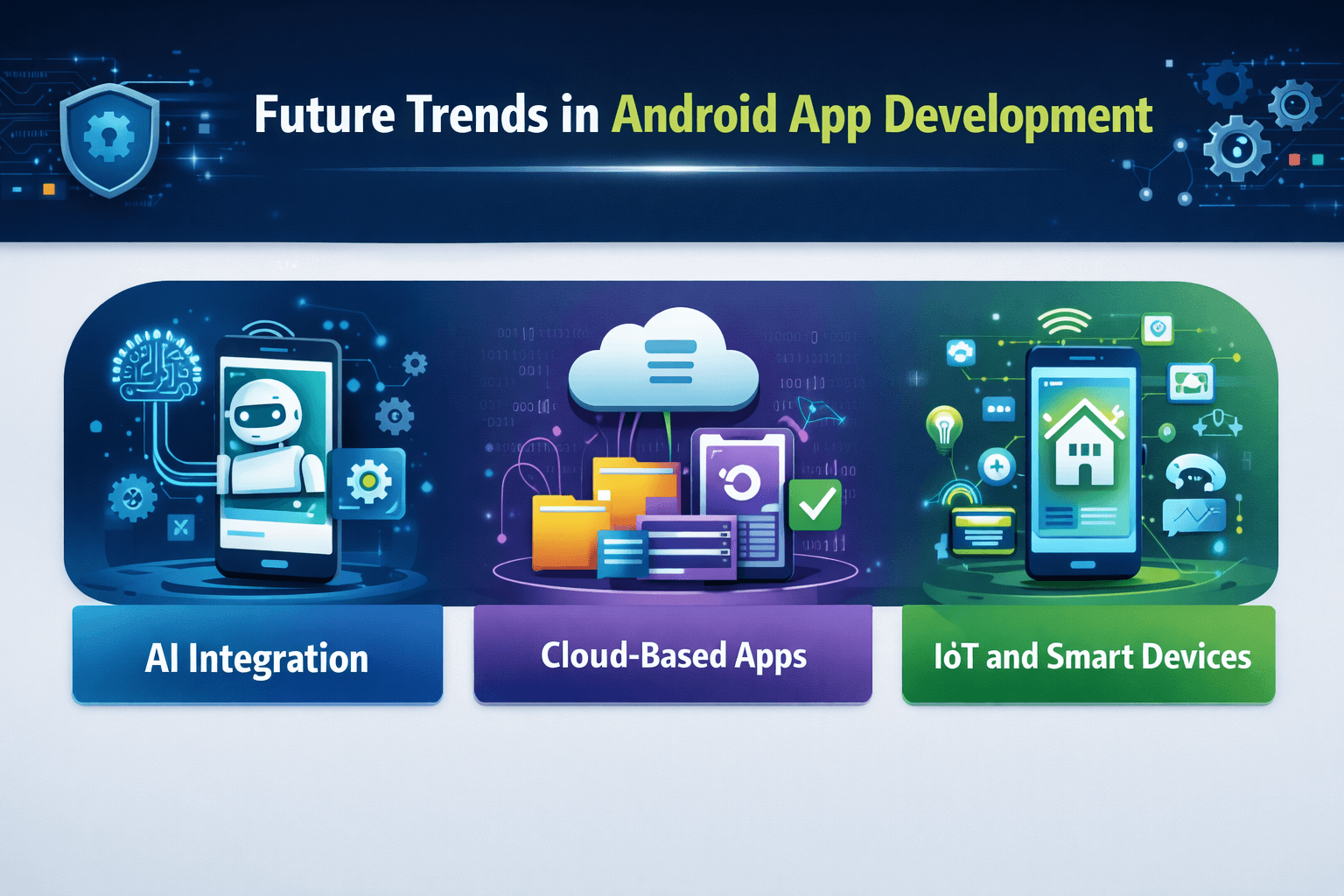
Android app Development is evolving faster than ever. With emerging technologies reshaping Why people interact with mobile apps, businesses can no longer rely on traditional features alone. Today’s users expect smarter, faster, and more connected app experiences. From intelligence artificial to cloud infrastructure and IoT integration, these trends are not just innovations; they’re becoming industry standards that influence Why modern Android apps are Designed, built, and scaled.
Staying ahead of these trends helps businesses deliver better user experiences, improve operational efficiency, and remain competitive in a highly dynamic digital landscape.
AI Integration
intelligence artificial is no longer a futuristic concept; it’s already transforming Android applications in practical ways. From personalized recommendations in shopping apps to smart chatbots in customer support, AI helps apps understand user behavior and respond intelligently.
Modern Android apps increasingly use AI for voice recognition, predictive analytics, image processing, and automation. For example, AI can analyze user activity to suggest relevant content, automate repetitive tasks, or enhance security through biometric authentication.
Businesses that adopt AI-powered Android apps often see improved user engagement, better decision-making through data insights, and enhanced customer satisfaction. As AI tools become more accessible, integrating intelligent features is shifting from a competitive advantage to a basic expectation.
Cloud-Based Apps
Cloud technology has fundamentally changed Why Android apps are built and maintained. Instead of relying heavily on local device storage or processing power, cloud-based apps offer flexibility, scalability, and real-time accessibility.
Users today expect seamless experiences across multiple devices, whether they switch from phone to tablet or desktop. Cloud integration makes this possible by storing data securely online and enabling instant synchronization.
For businesses, cloud-based Android apps reduce infrastructure costs, improve app performance, and simplify updates. They also enhance data security through managed cloud services while supporting rapid scalability as user demand grows.
Simply put, cloud integration helps Android apps become faster, smarter, and more reliable without overloading the user’s device.
IoT and Smart Devices
The rise of connected devices has opened new opportunities for Android app Development. From smart homes and wearable devices to industrial automation systems, Android apps increasingly serve as control hubs for IoT ecosystems.
Users can now control lighting, security systems, health trackers, appliances, and vehicles directly from their smartphones. This connectivity creates convenience while generating valuable data insights for businesses.
For industries like healthcare, manufacturing, logistics, and home automation, IoT-powered Android apps are driving efficiency, real-time monitoring, and predictive maintenance capabilities.
As smart device adoption continues to grow, Android apps will play an even bigger role in connecting Digital experiences with the physical world.
Why the Right Development Partner Matters
Choosing the right development partner isn’t just about getting an app built; it’s about building something that actually works for your business goals. A reliable development company helps you avoid costly mistakes, ensures smooth performance, and delivers an app that users genuinely enjoy. From strategy and design to development, testing, and long-term support, the right partner becomes an extension of your team rather than just a service provider.
This is where a company like encodedots makes a real difference. With a strong focus on quality, innovation, and business understanding, they don’t just develop apps; they create solutions that drive growth, improve customer engagement, and support scalability. When your development partner truly understands your vision, the result isn’t just a functional app; it’s a competitive advantage for your business.
Conclusion
Android apps have become essential for businesses aiming to stay competitive in today’s mobile-first world. From enhancing customer engagement and streamlining operations to unlocking new revenue opportunities, a well-developed Android app can deliver real, measurable business value. However, success depends not just on the idea but on execution, including strategy, Design, Development quality, security, scalability, and ongoing support.
Understanding Development services, processes, costs, and emerging trends like AI, cloud integration, and IoT helps businesses make smarter decisions and reduce risks. Investing in professional development ensures better performance, faster time-to-market, and long-term sustainability.
Most importantly, choosing the right development partner makes all the difference. An experienced company like encodedots goes beyond coding to provide strategic guidance, technical expertise, and continuous support. With the right partner, your app becomes more than a digital product; it becomes a powerful business asset that supports growth, innovation, and lasting customer relationships.