
 Web App Development
  Cloud App Development
  Front-End Development
  Cross Platform Development
  MVP Development
  Application Modernization
  PWA Development
  SaaS Application Development
  Software Development Outsourcing
  Offshore Custom Software Development
  Full Stack Software Development
  Custom Software Development
  Enterprise Software Development
  Cloud Computing Solutions
  Cloud Development
  Managed Cloud Services
  Cloud Native Development
  AI Consulting
  Machine Learning Development
  LLM Development
  AI Chatbot Development
  Data Analytics
  CI CD Development
  Digital Transformation
  Dev Ops
  Content Development
  Blockchain Development
  Web Development
  Web Design



 Generative AI
  Large Language Model
  AI Chatbot
  AngularJs
  ReactJS
  Dotnet Core
  Android
  iPhone
  Swift
Swift  E-Commerce
  NopCommerce
  BigCommerce
  Laravel
  Yii
Yii  AWS
AWS  Google Cloud
  Azure DevOps
  Automation Testing
  Security Testing
  API Testing
  Functional Testing
  MEAN Stack
  MERN Stack
  Full Stack Developers
  biz.encodedots
  biz@encodedots.com
  +91 738 328 3858


- What Is Home Care in Modern Healthcare?
- Why Future Healthcare Technology
- Benefits of Future Healthcare Technology
- Use Cases of At-Home Healthcare Technology
- Challenges in Implementing Future Healthcare Technology
- The Future of At-Home Care
- Conclusion
- Frequently Asked Questions
Healthcare delivery is entering a defining moment of change. For decades, hospitals and clinics have been the central hubs for diagnosis, treatment, and recovery. While these institutions continue to play a vital role, they are no longer the only place where meaningful care happens. Today, advances in healthcare technology are allowing care to extend beyond hospital walls bringing high-quality medical support directly into patients’ homes.
This shift is not just about convenience; it represents a fundamental transformation in Why care is delivered. With the help of digital innovation, smart medical devices, and intelligent systems, healthcare is becoming more connected, more responsive, and more personal. Understanding Why future healthcare technology is elevating at-home care helps reveal why this model is gaining momentum across the global healthcare ecosystem.
At-home care has evolved far beyond being a simple alternative to hospital visits. It is rapidly becoming a sophisticated, data-driven approach that enables continuous monitoring, personalized treatment plans, and proactive intervention. Technologies such as remote patient monitoring, intelligence artificial, telemedicine, and connected medical devices allow healthcare providers to track patient health in real time, detect risks early, and respond faster often before complications arise.
These innovations are also addressing some of the healthcare industry’s most persistent challenges. Rising treatment costs, overcrowded hospitals, and the increasing need for long-term care especially among aging populations are placing enormous pressure on traditional care models. Technology-enabled home care helps reduce this burden by improving efficiency, preventing avoidable hospital admissions, and enabling clinicians to focus on patients who need acute care the most.
Just as important, at-home care aligns naturally with what patients want. Receiving care in a familiar environment often makes people feel more comfortable, secure, and in control of their health journey. Patients are more likely to follow treatment plans, communicate openly, and stay engaged when care fits seamlessly into their daily lives. As healthcare systems continue to prioritize patient-centric models, the home is emerging as one of the most powerful and meaningful settings for care delivery.
The convergence of advanced technology and home-based care marks a significant evolution in healthcare. It is redefining Why providers deliver services, Why patients experience care, and Why health systems manage outcomes and costs. As innovation continues to accelerate, at-home care is set to become a cornerstone of modern, future-ready healthcare.
What Is Home Care in Modern Healthcare?
Home care refers to medical and supportive services delivered directly in a patient’s home. In its earlier form, home care primarily focused on essential assistance such as wound management, medication administration, rehabilitation support, and help with daily activities. While this approach met basic care needs, it was limited in scope and depended heavily on scheduled in-person visits, leaving little visibility into a patient’s condition between appointments.
In today’s healthcare landscape, home care has expanded into a more advanced and integrated model powered by digital health technologies. Modern home care now includes continuous health monitoring, virtual consultations, data-driven clinical decisions, and seamless coordination between patients and care teams. This evolution has significantly broadened the range of medical conditions that can be managed safely and effectively outside traditional healthcare facilities.
Traditional Home Care vs Technology-Enabled Home Care
Traditional home care followed a largely reactive approach. Nurses and caregivers visited patients at predetermined times, evaluated their condition, and addressed immediate concerns. However, any changes in a patient’s health between visits often went unnoticed, increasing the risk of delayed treatment and avoidable hospital readmissions.
Technology-enabled home care introduces a proactive and continuous care model. Wearable devices, in-home sensors, and mobile health applications collect real-time health data, enabling providers to monitor patient trends remotely. With early visibility into potential risks, care teams can intervene sooner, prevent complications, and deliver more timely support. This shift from episodic care to continuous monitoring enhances patient safety, improves efficiency, and leads to better overall outcomes.
Why Home-Based Healthcare Is Growing Rapidly
Several key factors are driving the rapid adoption of home-based healthcare. Demographic shifts play a major role, as aging populations worldwide increase the demand for long-term and chronic care solutions. Home-based care offers a more sustainable and patient-friendly alternative to institutional settings.
The rising prevalence of chronic conditions such as diabetes, cardiovascular disease, and respiratory disorders is another significant driver. These conditions require consistent management rather than occasional treatment, making home-based care an effective and practical solution. At the same time, escalating healthcare costs are pushing providers and policymakers to adopt care models that reduce hospital stays, emergency visits, and readmissions.
Patient expectations further accelerate this trend. Today’s patients value convenience, accessibility, and personalized care experiences. Technology-enabled home care addresses these expectations by delivering high-quality medical services directly within the patient’s living environment.
Why Future Healthcare Technology Is Elevating at Home Care
Future healthcare technology is driving the shift toward effective at-home care. By combining Digital platforms, intelligent analytics, and connected medical devices, home care is evolving from basic support into a precise, responsive, and patient-centred model that extends clinical oversight beyond hospital walls.
Remote Patient Monitoring (RPM)
Remote patient monitoring represents one of the most transformative Developments in modern home care. RPM enables continuous tracking of patient health outside clinical environments, allowing care teams to stay informed even when patients are miles away. Instead of relying on occasional check-ins, providers gain ongoing visibility into a patient’s condition.
Wearables and Connected Health Devices
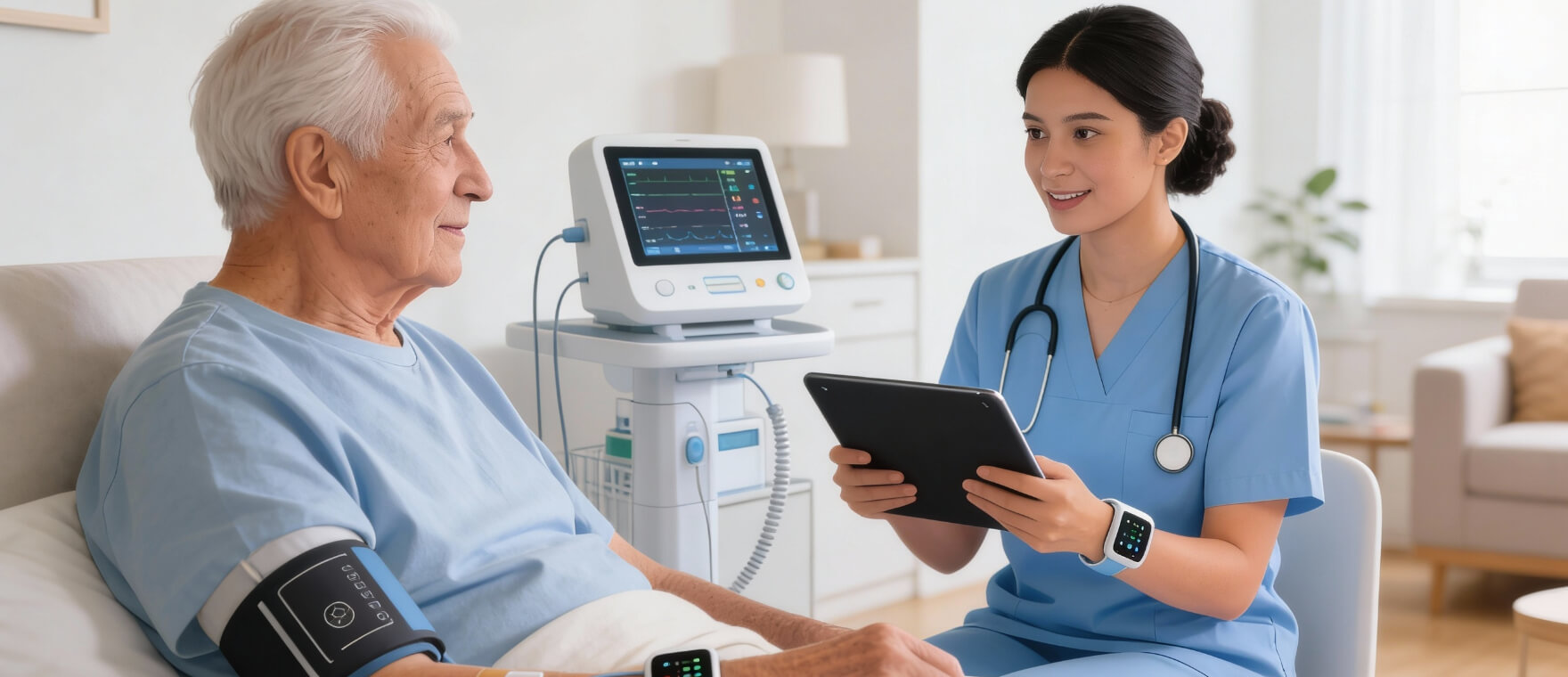
Wearable technologies such as smartwatches, fitness trackers, and medical-grade sensors play a central role in RPM. These devices continuously capture critical health metrics including heart rate, blood pressure, glucose levels, oxygen saturation, and activity patterns. Designed for everyday use, they reduce friction for patients and support long-term engagement with care plans.
Beyond wearables, connected health devices within the home further strengthen monitoring capabilities. Digital blood pressure cuffs, smart weighing scales, connected inhalers, and glucose monitors transmit accurate readings directly to clinical systems. Together, these tools create a consistent and reliable stream of health data, giving providers a clearer understanding of patient health between clinical visits.
Real-Time Data Tracking and Alerts
The true impact of remote patient monitoring lies in its ability to deliver real-time insights. Continuous data analysis allows clinicians to identify subtle changes in patient health before symptoms become severe. Automated alerts notify care teams when readings move outside safe ranges, prompting timely follow-ups or interventions.
This proactive approach is especially critical for patients managing chronic conditions. Early detection of deterioration can prevent complications, reduce emergency visits, and significantly lower the likelihood of hospital readmissions. By shifting care from reactive responses to early intervention, RPM strengthens patient safety while easing the burden on healthcare systems.
intelligence artificial in Home Care
intelligence artificial is transforming Why patient data is interpreted and acted upon in home care environments. Home-based care generates continuous streams of data from remote monitoring devices, wearables, and digital health platforms far more information than clinicians can manually review. AI enables care teams to convert this data into meaningful insights, allowing faster clinical decisions and more responsive care. In home care settings, where patients are not under constant physical supervision, this intelligence plays a critical role in protecting patient safety and improving outcomes.
Predictive Analytics for Early Diagnosis
AI-driven predictive analytics identify early warning signs by analyzing trends across vital signs, activity levels, symptom patterns, and historical health records. Rather than waiting for scheduled visits or patient-reported concerns, these systems surface subtle changes that may indicate clinical deterioration. Early detection allows providers to intervene sooner, adjust care plans, and prevent minor issues from escalating into emergencies. As a result, predictive analytics help reduce avoidable hospital admissions, improve chronic disease management, and support more proactive, preventive care at home.
AI-Powered Virtual Health Assistants
AI-powered virtual health assistants extend clinical support into patients’ daily lives. These tools help patients manage medications, track symptoms, follow care instructions, and stay informed between provider interactions. By offering reminders, guidance, and real-time feedback, virtual assistants improve adherence and reduce confusion especially for patients managing complex or long-term conditions. For healthcare teams, this support reduces administrative workload while ensuring patients remain engaged and supported, strengthening the overall effectiveness of home-based care.
Read More: intelligence artificial in Education
Telemedicine and Virtual Consultations
Telemedicine has become a cornerstone of modern at-home healthcare. It enables patients to consult healthcare professionals remotely through video calls, messaging platforms, and digital diagnostic tools.
Video Consultations from Home
Video consultations allow real-time interaction between patients and providers. They are particularly effective for follow-up visits, routine check-ups, and mental health consultations. Patients benefit from reduced travel time and increased access to specialists.
Reducing Hospital Visits and Wait Times
By handling non-emergency consultations remotely, telemedicine reduces pressure on hospitals and clinics. This improves efficiency across the healthcare system while maintaining continuity of care for patients at home.
Internet of Medical Things (IoMT)
The Internet of Medical Things refers to interconnected medical devices that communicate through digital networks. IoMT plays a vital role in elevating home care by enabling seamless data exchange and coordinated care.
Smart Medical Devices for Chronic Care
Smart medical devices support the management of chronic conditions by combining treatment delivery with data collection. Devices such as connected insulin pumps and cardiac monitors ensure accurate dosing and continuous monitoring, improving long-term disease management.
Seamless Data Sharing with Healthcare Providers
IoMT systems securely transmit patient data to healthcare providers in real time. This continuous flow of information enhances care coordination and supports informed clinical decisions, even when patients are not physically present in a healthcare facility.
Benefits of Future Healthcare Technology in At-Home Care
The integration of future healthcare technology into home-based care is transforming Why care is delivered, monitored, and experienced. These innovations create measurable value for patients, providers, and healthcare systems by improving outcomes, reducing costs, and enhancing the overall care experience.
Improved Patient Outcomes
Continuous monitoring and real-time health data allow care teams to identify changes in a patient’s condition at an early stage. Instead of reacting to complications after they occur, clinicians can intervene sooner with targeted adjustments to treatment plans. This proactive approach reduces preventable complications, supports faster recovery, and leads to more consistent, personalized care outcomes.
Cost Reduction for Patients and Providers
Technology-enabled home care significantly lowers healthcare costs by reducing unnecessary hospital admissions, shortening inpatient stays, and minimizing emergency department visits. By shifting appropriate care to the home, providers can optimize resource utilization while patients benefit from lower out-of-pocket expenses. For healthcare systems, this model supports long-term cost efficiency without compromising quality of care.
Enhanced Elderly and Chronic Care Management
Older adults and individuals living with chronic conditions require ongoing monitoring and coordinated care. Home care technologies provide continuous oversight while allowing patients to remain in their own homes. These tools support medication adherence, early detection of health deterioration, and safer independent living improving quality of life while reducing caregiver burden.
Increased Patient Independence and Comfort
Receiving care at home enables patients to maintain daily routines and stay connected to their familiar environment. This sense of comfort and autonomy plays a critical role in mental well-being, treatment adherence, and overall satisfaction with care. Technology enhances this experience by delivering professional-grade healthcare support without disrupting everyday life.
Use Cases of At-Home Healthcare Technology
Technology-driven home care is being adopted across a wide range of healthcare scenarios, enabling providers to deliver consistent, high-quality care outside traditional clinical settings. These use cases highlight Why at-home healthcare technology improves outcomes while enhancing patient comfort and operational efficiency.
Elderly Care and Assisted Living
At-home healthcare technology plays a critical role in supporting safe, independent living for elderly individuals. Remote monitoring systems track vital signs, movement patterns, and daily activity levels, while fall-detection sensors and emergency alerts ensure timely assistance when needed. Caregivers and clinicians gain continuous visibility into a patient’s well-being, reducing risks and preventing avoidable hospitalizations.
Post-Surgery Recovery at Home
For patients recovering from surgery, remote monitoring allows clinicians to track recovery progress without requiring extended hospital stays. Vital signs, pain levels, and mobility data can be reviewed remotely, enabling early detection of complications such as infections or delayed healing. This approach not only reduces healthcare costs but also supports faster, more comfortable recovery in a familiar home environment.
Chronic Disease Management
Home-based healthcare technologies are especially effective for managing chronic conditions such as diabetes, cardiovascular disease, and respiratory disorders. Continuous monitoring combined with AI-driven insights helps patients maintain stable health, adhere to treatment plans, and identify early warning signs. Providers can intervene proactively, reducing complications, emergency visits, and long-term care costs.
Mental Health and Remote Therapy
Digital mental health platforms and teletherapy tools make mental healthcare more accessible and consistent. Patients can engage in therapy sessions, symptom tracking, and guided interventions from home, removing common barriers such as travel, stigma, and scheduling challenges. Continuous engagement supports better treatment adherence and long-term mental health outcomes.
Challenges in Implementing Future Healthcare Technology
While technology-enabled home care offers significant benefits, its successful implementation comes with challenges that healthcare providers must carefully navigate. Addressing these issues is essential to ensure patient safety, regulatory compliance, and long-term sustainability.
Data Privacy and Security Concerns
Healthcare systems manage large volumes of sensitive patient data, making them a prime target for cyber threats. As home-based care relies on connected devices and cloud-based platforms, robust cybersecurity frameworks, encryption protocols, and strict access controls become critical. Compliance with data protection regulations is not only a legal requirement but also a key factor in maintaining patient trust and organizational credibility.
Technology Adoption Barriers
The effectiveness of home care technology depends heavily on patient and caregiver adoption. Some patients particularly older adults or those with limited Digital literacy may struggle to use connected devices or digital platforms. Overcoming this challenge requires intuitive technology design, clear onboarding processes, patient education, and ongoing caregiver support to ensure technology enhances care rather than creating frustration or resistance.
Integration with Existing Healthcare Systems
Integrating new home care technologies with established healthcare infrastructure can be complex and resource-intensive. Many providers rely on legacy systems that were not Designed to support real-time data exchange or remote monitoring. Achieving interoperability through standardized data formats and seamless system integration is essential to avoid fragmented workflows, data silos, and clinician overload.
The Future of At-Home Care – What to Expect Next?
The future of home healthcare is moving toward a model that is more personalized, predictive, and seamlessly connected. As intelligence artificial, automation, and smart home technologies continue to advance, at-home care will become increasingly capable of supporting complex medical needs while maintaining a high standard of safety and quality.
Personalized Healthcare Experiences
Future at-home care systems will use real-time patient data, medical history, and lifestyle patterns to tailor care plans for each individual. This personalized approach allows providers to deliver more precise interventions, improve adherence to treatment plans, and create care experiences that are truly centered around the patient’s needs and daily routines.
Automation and Smart Home Integration
Smart home technologies will play a growing role in at-home healthcare by automating routine care tasks and supporting continuous monitoring. Connected devices and sensors embedded within the home environment will track health indicators, detect anomalies, and share actionable insights with care teams, enabling timely interventions without disrupting the patient’s everyday life.
Healthcare Moving from Hospitals to Homes
As healthcare technology continues to evolve, the home will increasingly function as a primary care setting rather than a secondary option. Many services traditionally delivered in hospitals will shift to home environments, reducing dependence on clinical facilities, easing capacity constraints, and allowing patients to receive high-quality care in a more comfortable and familiar setting.
Conclusion
The evolution of healthcare technology is fundamentally reshaping Why care is delivered beyond traditional clinical settings. Through remote patient monitoring, intelligence artificial, telemedicine, and connected medical devices, home care is no longer a secondary option it is becoming a core component of modern healthcare delivery. These technologies enable continuous oversight, earlier intervention, and more personalized care, all within the patient’s home.
As Digital health solutions continue to mature, technology-enabled home care will play a critical role in reducing hospital dependency, improving clinical outcomes, and controlling healthcare costs. Most importantly, it supports a more patient-centric model of care one that prioritizes comfort, safety, and quality of life while maintaining clinical rigor. The future of healthcare is increasingly home-based, and technology is the foundation making this shift both scalable and sustainable.
