Web App Development
 Cloud App Development
 Front-End Development
 Cross Platform Development
 MVP Development
 Application Modernization
 PWA Development
 SaaS Application Development
 Software Development Outsourcing
 Offshore Custom Software Development
 Full Stack Software Development
 Custom Software Development
 Enterprise Software Development
 Cloud Computing Solutions
 Cloud Development
 Managed Cloud Services
 Cloud Native Development
 AI Consulting
 Machine Learning Development
 LLM Development
 AI Chatbot Development
 Data Analytics
 CI CD Development
 Digital Transformation
 Dev Ops
 Content Development
 Blockchain Development
 Web Development
 Web Design
 Cloud Computing Solutions
 AI & ML Development
 Data Science Solutions
 UI/UX Design
 QA and Testing











 Full Stack Developers
 KnockoutJS Developers
 Microsoft Developers
 Swift Developers
 Xamarin Developers
 Blockchain Developers
 WebFlow Developers
 Software Developers
 Fintech Developers
 Security Testing Developers
 Functional Testing Developers
 Azure Developers
 Current Opening
 biz.encodedots
 biz@encodedots.com
 +91 99747 42772


- What Is a Custom LLM
- Three Approaches to Building a Custom LLM
- How to Build a Custom LLM for Your Business
- Custom LLM vs Public LLM
- How Businesses in Different Industries
- Cost to Build a Custom LLM
- Common Mistakes Businesses
- Getting Started
- Conclusion
- Frequently Asked Questions
Your team has been using ChatGPT, Gemini, or some other AI tool for months. And while it works broadly, you have noticed the gaps. It does not know your products. It doesn’t seem to understand your compliance requirements. It gives the same generic response to a highly specific question that only someone inside your industry would know how to answer.
That gap is exactly why more businesses in 2026 are exploring how to build a custom LLM, a large language model trained on their own data, aligned with their business rules, and deployed in their own environment.
This guide is written for those who want a clear, practical understanding of what building a custom LLM involves without the PhD-level technical detail. You will learn what a custom LLM is, which approach is right for your situation, how the process works step by step, and what it realistically costs.
What Is a Custom LLM and Why Does It Matter for Your Business?
A custom LLM is a large language model that has been trained, adapted, or configured using your business-specific data, terminology, and rules. Instead of relying on a public AI that was trained on generic internet content, you build a model that understands your industry, your workflows, and your business context.
The difference is significant. A general-purpose AI might know that a patient record is a healthcare document. A custom LLM trained on your clinical data, care protocols, and documentation standards will understand how your team uses that document and respond accordingly.
Custom LLMs are being used by businesses to power internal knowledge assistants, automate document review, support customer service teams, assist with compliance processes, and accelerate decision-making.
Why Generic AI Tools Are Not Enough
Off-the-shelf AI tools have real value for general productivity. But they create problems when businesses need:
- Accurate responses based on proprietary or industry-specific knowledge
- Strict control over what data the AI can access and how it responds
- Compliance with data privacy regulations such as GDPR, HIPAA, or sector-specific standards
- Consistent outputs that match the company’s tone, processes, and business rules
- A long-term AI capability that does not depend on a third-party API or its pricing
Three Approaches to Building a Custom LLM
The phrase ‘build a custom LLM’ is often misunderstood. Most businesses do not need to train a model from scratch. In 2026, there are three practical approaches, and the right one depends on your use case, data readiness, and budget.
1. Retrieval-Augmented Generation (RAG)
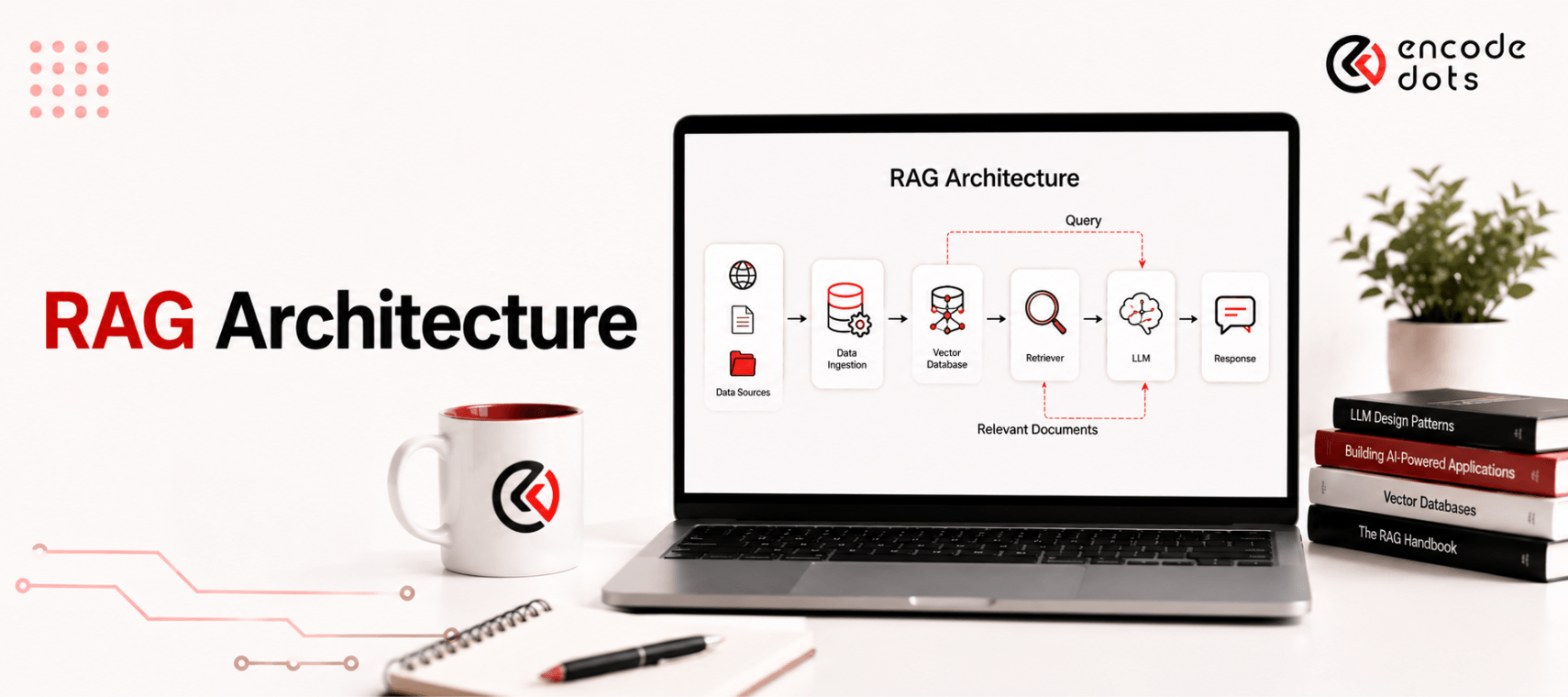
RAG connects an existing AI model to your own knowledge base documents, databases, internal wikis, product manuals, or any structured data source. When a user asks a question, the system retrieves relevant information from your data and passes it to the model, which then generates a response grounded in your content.
RAG does not change the model itself. It changes what the model can see at the time of each response.
RAG is recommended for most businesses starting. It is faster to deploy, more cost-effective, and easier to update when your knowledge base changes.
2. Fine-Tuning
Fine-tuning takes an existing base model, such as Llama 3 or Mistral, and continues training it on your specific data. This changes how the model behaves across all responses, not just when it retrieves context.
Fine-tuning is appropriate when you need the model to consistently follow a particular tone, apply domain-specific reasoning, or handle structured outputs that require deep adaptation. It is more resource-intensive than RAG, but necessary when surface-level retrieval is not sufficient.
3. Build From Scratch
Training a model from scratch means starting with raw data and building a foundation model with no pre-existing knowledge. This is rarely the right choice for businesses.
It requires significant compute investment, specialised expertise, and months of development time. It is only justified when the domain is so unique that public models would contaminate it, or when the organisation needs complete control over every parameter of the model’s knowledge.
For most businesses, the practical answer in 2026 is a hybrid: start with a strong open-source base model, apply RAG for knowledge retrieval, and layer fine-tuning where deeper domain adaptation is needed.
Approach Comparison:
| Approach | Best For | Timeline | Cost Range (2026) |
| RAG | Dynamic knowledge retrieval | 2–6 weeks | $15K – $75K |
| Fine-Tuning | Domain tone & reasoning | 4–10 weeks | $30K – $100K |
| RAG + Fine-Tuning (Hybrid) | Production-grade enterprise AI | 8–16 weeks | $50K – $200K |
| Build From Scratch | Rare – unique domain only | 6–18 months | $150K+ |
Not sure which approach fits your business?
EncodeDots can assess your use case and recommend the right path.
Talk to our team!Step-by-Step: How to Build a Custom LLM for Your Business
Regardless of the approach you choose, the process follows a clear sequence of decisions and build stages. Here is a practical overview.
Step 1: Define the Business Problem
Start by identifying the specific problem the LLM needs to solve. Vague goals such as ‘improve our AI capabilities’ are not useful starting points. Define the use case precisely: What task will the model handle? Who will use it? What does a successful output look like? What will success be measured by?
The clarity of this step determines everything that follows from model selection to data requirements and deployment architecture.
Step 2: Assess Your Data
A custom LLM is only as good as the data it learns from or retrieves. Before selecting an approach, assess what data you have, what format it is in, how much of it is available, whether it is structured or unstructured, and whether it contains sensitive information that requires access controls.
Data preparation — cleaning, organising, deduplicating, and labelling is one of the most time-consuming parts of the process and should not be underestimated.
Step 3: Select the Right Approach
Based on your use case and data assessment, decide whether RAG, fine-tuning, or a hybrid approach is appropriate. If your knowledge base changes frequently, RAG is typically the better starting point. If consistent behavioural adaptation is required, fine-tuning may be necessary on top of retrieval.
Step 4: Choose a Base Model
For most businesses, starting with an established open-source model makes practical sense. In 2026, enterprise teams commonly begin with models such as Llama 3.1, Mistral, or Qwen and adapt them rather than building from scratch. The choice of base model affects cost, performance, and infrastructure requirements.
Step 5: Build, Fine-Tune, or Configure the System
This is the technical build phase. Depending on the approach, RAG involves setting up a retrieval pipeline, vector database, embedding model, and document ingestion process. Fine-tuning involves preparing training datasets, selecting fine-tuning techniques such as LoRA or QLoRA, and running training cycles on a suitable infrastructure.
Step 6: Evaluate and Test
Before deployment, the model must be evaluated against the use case defined in Step 1. Testing should cover accuracy, consistency, tone, safety, and failure modes. For regulated industries, this stage should also include compliance and access control validation.
Step 7: Deploy and Monitor
Deployment can be on-premise, in a private cloud environment, or through a managed service, depending on your data privacy requirements. After deployment, ongoing monitoring is essential. Models degrade over time as business data changes. Build a process for reviewing outputs, catching errors, and updating the system as needed.
Custom LLM vs Public LLM
The private LLM vs public LLM debate comes down to three trade-offs: control, security, and performance on your tasks.
A public LLM is fast to adopt and costs almost nothing to start. But you don’t control the model, you can’t guarantee where your data goes, and its accuracy on your niche topics is whatever the vendor’s general training produced.
A custom LLM flips that. You control the behavior, you decide where data lives, and you can tune it until it’s measurably better than any general model at the handful of tasks that actually matter to your business.
| Factor | Public LLM | Custom LLM |
| Setup speed | Minutes | Weeks to months |
| Data control | Vendor-managed | Yours |
| Accuracy on your domain | General | Tuned and high |
| Brand voice | Generic | Consistent |
| Cost model | Per-token | Upfront + hosting |
| Best for | Experiments, broad tasks | Core, repeatable, sensitive workflows |
The honest answer: you’ll probably use both. Public models for low-stakes brainstorming, a custom LLM for the workflows where accuracy, privacy, and voice are non-negotiable.
How Businesses in Different Industries Are Approaching Custom LLMs
Custom LLMs are not limited to technology companies. Across industries, organisations are using domain-adapted AI to solve practical operational problems. Here are three examples of how this applies in healthcare, real estate, and manufacturing.
Healthcare
A healthcare organisation dealing with high volumes of clinical documentation, discharge summaries, patient notes, and referral letters faces a specific challenge: the language is highly specialised, the accuracy requirements are high, and the data is subject to strict regulatory requirements.
A custom LLM built on clinical data and configured with appropriate access controls can help clinical teams retrieve patient information faster, assist with documentation drafting, and support compliance-related workflows. Because the model is trained on the organisation’s own terminology and care protocols, its outputs are more relevant and less error-prone than a generic AI tool.
Note: Any LLM deployed in a healthcare environment must be assessed against applicable data privacy regulations. Compliance requirements vary by region and should be validated with legal and compliance teams.
Real Estate
A real estate agency managing thousands of property listings, client enquiries, and transaction documents faces a distinct set of challenges: responding to buyer and seller queries quickly, generating consistent property descriptions, and efficiently reviewing lease agreements.
A custom LLM trained on the agency’s listings, market data, and communication history can power a lead qualification assistant that responds to inbound enquiries around the clock, draft property descriptions that match the brand’s tone, and help agents summarise contract documents without reading every page manually. The result is a more responsive client experience with reduced pressure on the team.
Manufacturing
A manufacturing business managing supply chains, vendor documentation, equipment manuals, and quality control processes generates enormous volumes of operational text. Locating the right information quickly, such as a maintenance protocol, a supplier specification, or a safety regulation, is a persistent challenge.
A custom LLM connected to the company’s documentation library through an RAG architecture can serve as an internal knowledge assistant, helping engineers, operations teams, and procurement managers find answers without sifting through dozens of documents. It can also assist with predictive maintenance planning by analysing historical maintenance records and flagging patterns.
What Does It Cost to Build a Custom LLM in 2026?
Cost varies significantly based on what you are building, how much customisation is needed, the quality of your existing data, and the infrastructure you require. Published industry guides in 2026 report the following general ranges:
- RAG-based system for a specific use case: approximately $15,000 – $75,000
- Fine-tuned model with RAG and production deployment: approximately $40,000 – $150,000
- Full-scale enterprise AI platform with multiple integrations and compliance requirements: $150,000+
These figures represent build costs, not ongoing operational costs, which include infrastructure, maintenance, and model updates. A well-scoped proof of concept typically takes 6 to 12 weeks to complete.
The most significant cost driver is not always the model itself; it is data preparation, evaluation, and lifecycle management. Businesses that underestimate the time required to clean and organise their data consistently face budget overruns and delays.
Common Mistakes Businesses Make When Building a Custom LLM
Most custom LLM projects that do not deliver expected results fail for business reasons, not technical ones. Here are the patterns that most commonly cause problems:
- Starting without a clearly defined use case. If the goal is vague, the model will solve a vague problem, which is not a useful outcome.
- Overestimating how much data is needed and underestimating how long it takes to prepare. Quality matters far more than quantity.
- Jumping to fine-tuning before testing whether a well-configured RAG system already solves the problem. Fine-tuning adds cost and complexity that may not be necessary.
- Assuming deployment is the endpoint. Without an ongoing monitoring and update process, model performance will decline.
- Ignoring data privacy and compliance requirements at the scoping stage. Retrofitting compliance controls is significantly more expensive than building them in from the start.
Getting Started: What You Should Do Next
Building a custom LLM for your business in 2026 is more accessible than it was even two years ago. The infrastructure has matured, the open-source model ecosystem is strong, and the development costs have come down significantly for well-scoped projects.
The most important thing is to start with the right question, not ‘how do we build an AI model’, but ‘what specific business problem do we need to solve, and what would a reliable solution look like?’. Everything else, the approach, the data strategy, the infrastructure, follows from that clarity.
EncodeDots helps businesses design and build custom AI solutions that are practical, data-ready, and aligned with real operational goals. Whether you are exploring your first LLM use case or looking to scale an existing AI capability, the team can help you identify the right approach and build it correctly.
Conclusion
Building a custom LLM in 2026 isn’t about chasing hype; it’s about turning your proprietary knowledge into a durable competitive advantage that compounds over time.
The businesses winning with AI aren’t the ones with the biggest models. They’re the ones who scoped a real problem, cleaned their data, started with the cheapest approach that worked, and kept improving. The technology is mature. The costs are predictable. The only real risk now is moving too slowly while competitors compound their head start.
A custom LLM for business is no longer a gamble. It’s a strategic investment with a measurable payback if you build it deliberately.