Web App Development
  Cloud App Development
  Front-End Development
  Cross Platform Development
  MVP Development
  Application Modernization
  PWA Development
  SaaS Application Development
  Software Development Outsourcing
  Offshore Custom Software Development
  Full Stack Software Development
  Custom Software Development
  Enterprise Software Development
  Cloud Computing Solutions
  Cloud Development
  Managed Cloud Services
  Cloud Native Development
  AI Consulting
  Machine Learning Development
  LLM Development
  AI Chatbot Development
  Data Analytics
  CI CD Development
  Digital Transformation
  Dev Ops
  Content Development
  Blockchain Development
  Web Development
  Web Design



 Generative AI
  Large Language Model
  AI Chatbot
  AngularJs
  ReactJS
  Dotnet Core
  Android
  iPhone
  Swift
Swift  E-Commerce
  NopCommerce
  BigCommerce
  Laravel
  Yii
Yii  AWS
AWS  Google Cloud
  Azure DevOps
  Automation Testing
  Security Testing
  API Testing
  Functional Testing
  MEAN Stack
  MERN Stack
  Full Stack Developers
  biz.encodedots
  biz@encodedots.com
  +91 738 328 3858


- Pre-Devlopment Planning
- Frontend Devlopment
- Backend Devlopment
- Testing and Quality Assurance
- Post-Launch Deployment
- Summarising
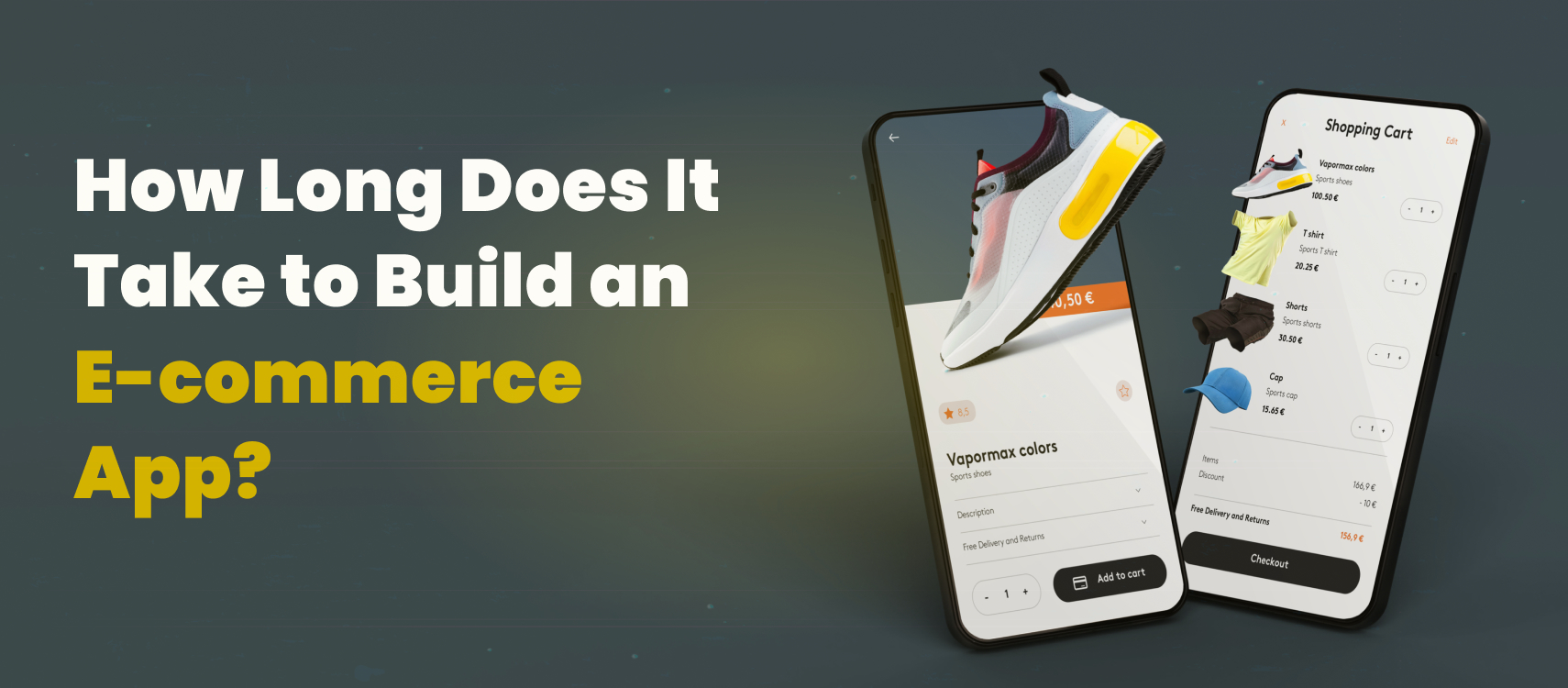
In the ever-evolving world of technology, e-commerce has emerged as a cornerstone of modern business. With the rise in online shopping, the demand for robust and user-friendly e-commerce application Devlopment is on the rise. Whyever, the question that often lingers in your mind is, Why much time Real it take to build an e-commerce app?
In this article, we are going to explain the key factors that influence the Devlopment timeline of an e-commerce app, offering insights into the various stages and considerations that contribute to its creation.
Pre-Devlopment Planning
Before any coding begins, a significant portion of time is dedicated to meticulous planning. This phase involves defining the project scope, setting clear objectives, and creating a detailed roadmap for the ecommerce app Devlopment process.
Feature Set:
Defining the core features of the e-commerce app, such as product catalog, shopping cart, user accounts, payment gateway integration, and order tracking.
Platform Selection:
Choosing the platform for app Devlopment, whether it’s native (iOS and Android) or cross-platform (React Native, Flutter), depending on the target audience and budget.
Designee and User Experience:
Designeeing wireframes and prototypes that outline the app’s layout, user interface, and user experience. This stage involves collaboration between Designeeers, developers, and stakeholders to ensure a seamless Designee.
Technology Stack:
Selecting the appropriate technologies and programming languages for app Devlopment, along with the backend framework, database, and any third-party integrations.
Project Timeline:
Allocating timeframes for each Devlopment phase, including Designee, frontend Devlopment, backend Devlopment, testing, and deployment.
Frontend Devlopment
The frontend of an e-commerce mobile app or web app is responsible for delivering an engaging and intuitive user experience. The Devlopment timeline for the frontend depends on factors such as the complexity of the Designee, the number of features, and the responsiveness across devices.
User Interface Devlopment:
Translating the wireframes and prototypes into actual user interfaces. This phase involves creating interactive elements, navigation structures, and responsive layouts that adapt to different screen sizes.
Integration of UI/UX Elements:
Incorporating elements like product images, videos, reviews, and sorting/filtering options to enhance the user experience.
Shopping Cart and Checkout Process:
Developing the shopping cart functionality, including adding/removing items, calculating total costs, applying discounts, and implementing a seamless checkout process.
User Authentication and Account Management:
Building user registration, login, and account management functionalities, along with password reset and profile customization options.
Backend Devlopment
The backend of an e-commerce app is the engine that powers its functionalities, manages data, and supports user interactions. The Devlopment timeline for the backend is influenced by factors such as the complexity of business logic, database Designee, and integrations with third-party services.
Database Setup:
Designeeing and implementing a database structure that efficiently stores product information, user data, orders, and other relevant details.
API Devlopment:
Creating APIs that allow the frontend and backend to communicate seamlessly. This includes defining endpoints for retrieving product data, processing orders, and managing user accounts.
Payment Gateway Integration:
Integrating payment gateways such as PayPal, Stripe, or other preferred methods to enable secure and convenient transactions.
Order Management:
Developing the logic for order processing, inventory management, and order tracking. This involves ensuring accurate stock updates and notifications for order status changes.
Testing and Quality Assurance
The testing phase is critical to identify and rectify any issues before the app is launched. The time required for testing depends on the thoroughness of the testing process and the complexity of the app’s functionalities.
Unit Testing:
Testing individual components and functions to ensure they work as intended. This involves checking inputs, outputs, and edge cases.
Integration Testing:
Verifying that different parts of the app work together smoothly and that data is accurately transferred between frontend and backend components.
User Acceptance Testing (UAT):
Conducting UAT to validate the app’s functionality from an end-user perspective. This involves real users interacting with the app to identify any usability issues or glitches.
Performance Testing:
Evaluating the app’s performance under various conditions, such as high traffic loads, to ensure it can handle user demands without slowing down or crashing.
Deployment and Post-Launch Activities
Once testing is complete and the app is refined, it’s ready for deployment. This phase involves launching the app on app stores and ensuring a smooth transition from Devlopment to the production environment.
App Store Submission:
Preparing the app for submission to app stores (such as the Apple App Store and Google Play Store). This process includes creating app descriptions, icons, screenshots, and meeting all platform-specific requirements.
Server Deployment:
Deploying the app’s backend to a production server, configuring domain names, setting up security certificates (SSL), and ensuring server scalability.
Monitoring and Maintenance:
Continuously monitoring the app’s performance, user feedback, and any potential issues post-launch. Regular maintenance involves addressing bugs, making updates, and adding new features based on user needs.
Summarising
The timeline for building an e-commerce app varies based on a myriad of factors, including app complexity, Designee intricacies, technology choices, testing depth, and the efficiency of collaboration among Devlopment teams. A rough estimate can range from a few months to over a year, with the goal of delivering a seamless and user-friendly e-commerce experience.